Why Your Business Makes Sales But Has No Cash (Profitability Explained)
SwiftPOS Team
Published September 17, 2026

You're making sales, customers are coming in, the cash register (or your cash box) has naira notes flowing through it, yet at the end of the day, week, or month, your bank account doesn't reflect the effort. You feel like you're constantly chasing payments, managing inventory manually, and wondering where all the money goes. This common frustration is not just yours; it's a significant challenge for many Nigerian business owners.
Shop owner looking concerned at ledgersThe Hidden Costs Draining Your Retail Profit
Many Nigerian retailers focus intensely on increasing sales, believing that higher turnover automatically means higher profit. However, without a clear understanding of your true costs and cash flow, increased sales can sometimes just mean increased headaches and more business cash leakage. This disconnect between sales and actual profit is a major challenge.
Consider this: a typical retail business in Nigeria might see 60% to 85% of its revenue go directly to the Cost of Goods Sold (COGS). That leaves a slim margin to cover everything else. On top of that, operating expenses can quickly eat into what's left.
Here's a breakdown of common hidden costs and retail profit problems that can leave you with sales but no cash:
- Inventory Shrinkage and Spoilage: Manual inventory tracking can lead to unnoticed theft, damaged goods, or expired products, especially for items with expiration dates. This directly impacts your bottom line. Annually, inventory holding costs can be 5% to 15% of your total inventory value, a figure that swells significantly with poor management.
- Inefficient Procurement: Without accurate sales data, you might be overstocking slow-moving items or frequently running out of popular ones. This leads to capital tied up in unsold stock or lost sales opportunities.
- Uncontrolled Expenses: Are you tracking every naira spent on electricity (including generator fuel, which can range from ₦15,000 to ₦150,000 monthly for shops), transportation (₦10,000 - ₦200,000 monthly), or even small daily outlays? Many small businesses don't categorize expenses, making it impossible to identify where money is truly going.
- Staff Pilferage and Errors: Manual systems are vulnerable to human error and deliberate theft. Without clear sales records and staff accountability, losses can mount unnoticed.
- Credit Sales Management: Offering credit to trusted customers is common, but poorly managed credit books lead to delayed payments (often 30-90 days for B2B) and bad debts, severely impacting your shop cash flow.
- Bank Charges and Fees: While seemingly small, transaction fees (₦2,000 - ₦25,000 monthly) from multiple payment platforms and bank charges can add up, especially with high sales volumes.
- Lack of Real-time Data: Making decisions based on outdated or incomplete information is like driving with your eyes closed. You can't react quickly to market changes, identify best-selling products, or spot revenue leaks without real-time insights.
 Sales hub dashboard showing current sales and trends
The Problem with Traditional Methods
Many Nigerian retailers, from provision stores to boutiques, still rely on manual record-keeping—notebooks, Excel spreadsheets, or even just memory—to manage their operations. While seemingly cheap upfront, these methods come with significant hidden costs that erode profitability.
- Time Consumption: Manually recording sales, updating inventory, reconciling cash, and tracking expenses is incredibly time-consuming. This time could be better spent on customer service, marketing, or strategic planning.
- Error Prone: Human error is inevitable. Miscalculations, misplaced entries, or forgotten records can lead to inaccurate stock counts, incorrect pricing, and ultimately, incorrect profit figures.
- Lack of Visibility: With data scattered across multiple notebooks or spreadsheets, getting a consolidated view of your business performance is nearly impossible. You can't easily identify your most profitable products, peak sales times, or even your true net profit after all expenses.
- Difficulty in Scaling: As your business grows, manual systems become unsustainable. Imagine managing inventory across multiple branches or tracking hundreds of products with just pen and paper—it's a recipe for chaos and significant retail profit problems.
- Vulnerability to Fraud: Without automated tracking and audit trails, it's harder to detect staff theft or unauthorized discounts, leading to direct business cash leakage.
Embracing a Smarter Approach: Integrated Business Management
The solution to the "sales but no cash" dilemma lies in adopting an integrated approach to business management. This means moving beyond just recording sales transactions to connecting every aspect of your retail operation—sales, inventory, customers, suppliers, staff, and expenses—into one cohesive system.
This smarter approach provides:
- Real-time Visibility: You gain an immediate, accurate picture of your sales, stock levels, and financial performance at any given moment. This allows for proactive decision-making rather than reactive problem-solving.
- Automated Processes: Repetitive tasks like inventory updates, sales reporting, and expense tracking are automated, freeing up valuable time and reducing human error.
- Data-Driven Insights: Instead of guessing, you'll have concrete data to identify best-selling products, understand customer purchasing patterns, and pinpoint areas of inefficiency or loss.
- Enhanced Control: From managing staff permissions to tracking every transaction, an integrated system gives you tighter control over your operations, minimizing shrinkage and fraud.
- Improved Cash Flow: By accurately tracking receivables (customer credit), optimizing inventory, and monitoring expenses, you can significantly improve your shop cash flow and ensure that sales translate into actual cash in hand.
How SwiftPOS NG Empowers Your Retail Business
This is where a comprehensive platform like SwiftPOS NG comes into play. It's designed specifically for Nigerian retailers to bridge the gap between sales activity and actual profitability, addressing the core issues of retail profit problems and business cash leakage. SwiftPOS NG is more than just a cash register; it's an all-in-one business management and Point-of-Sale (POS) system that connects every vital aspect of your retail operation.
Consider its key features:
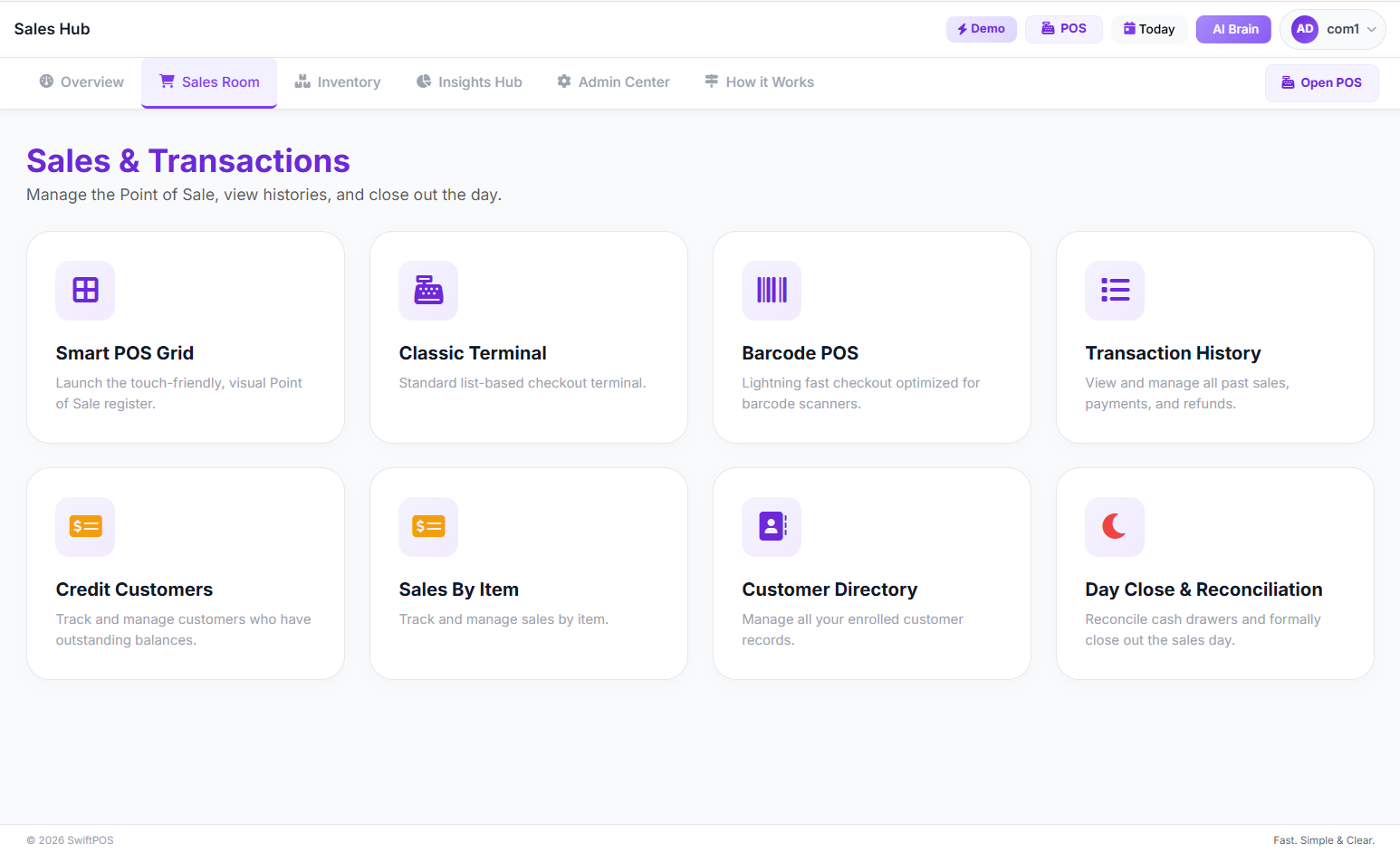
- Integrated Sales & Inventory Management: SwiftPOS NG ensures that every sale automatically updates your inventory in real-time. Whether you're using the , the
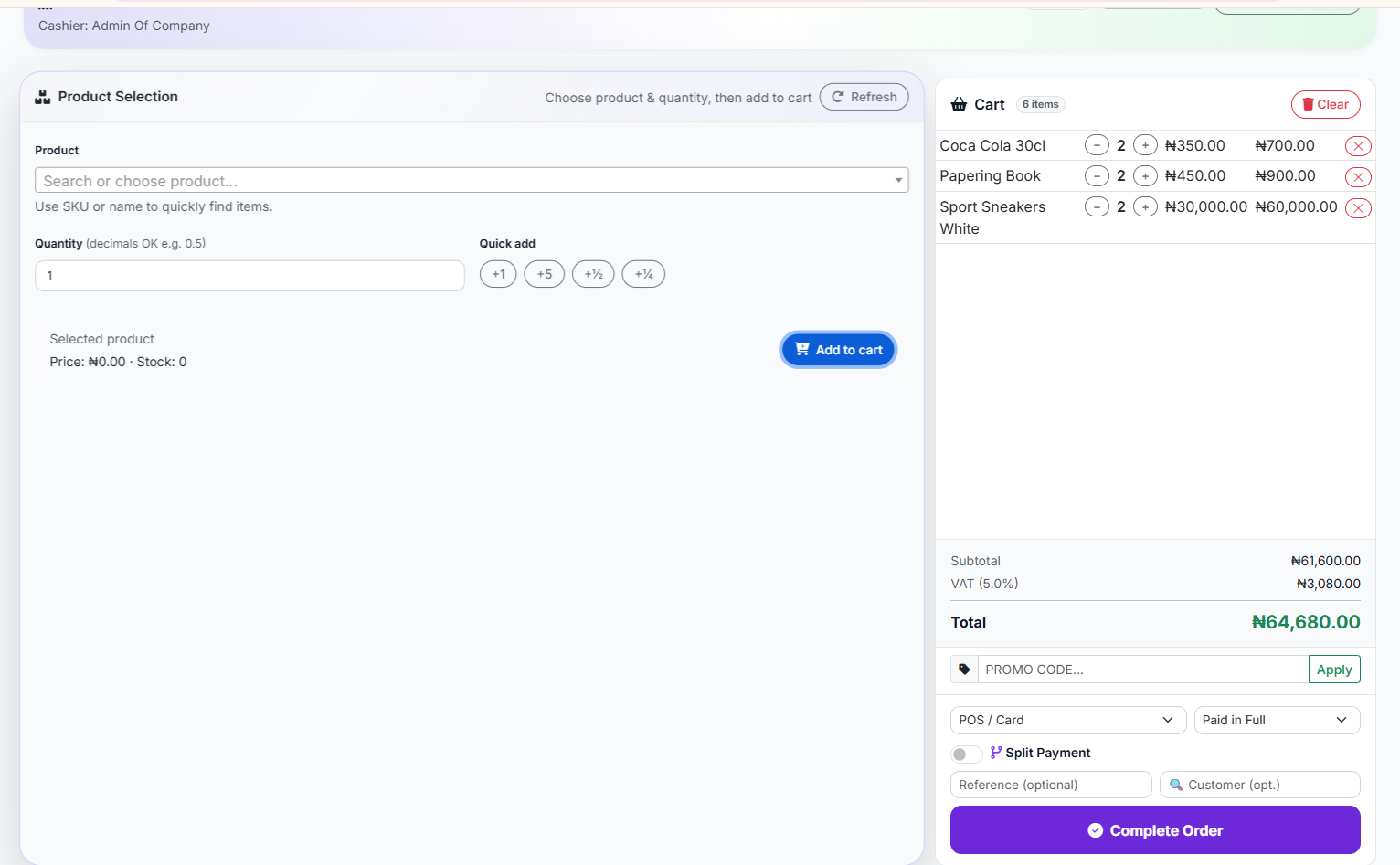 Classic POS Interfacefor visual selection, or the
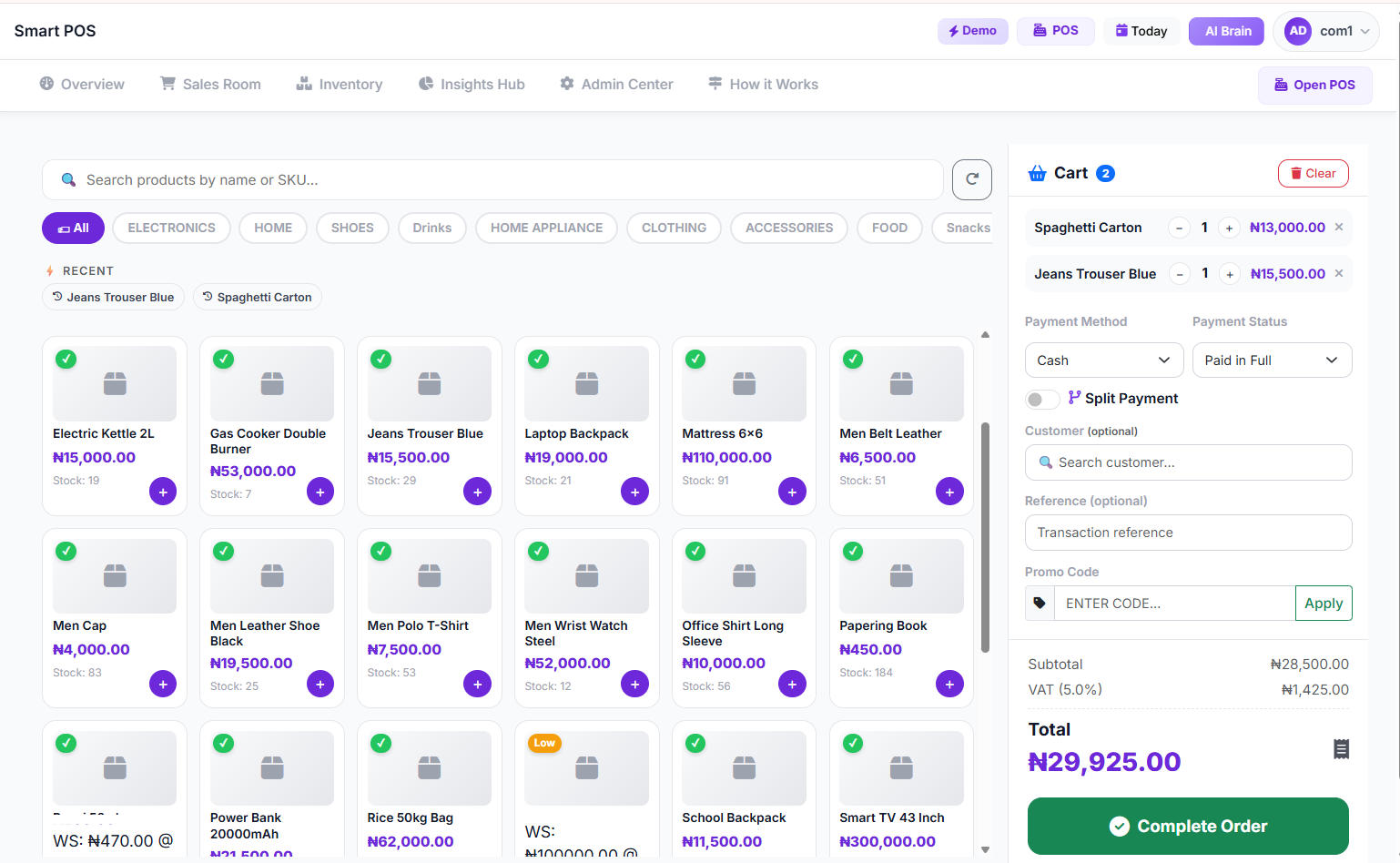 Smart Grid POSfor high-volume checkouts, your stock levels are always accurate. This eliminates manual stock takes, reduces errors, and helps you identify Nigerian Retailers: Inventory Management Mistakes Crushing Your Profits. You can even manage products with expiration dates, crucial for pharmacies and provision stores.
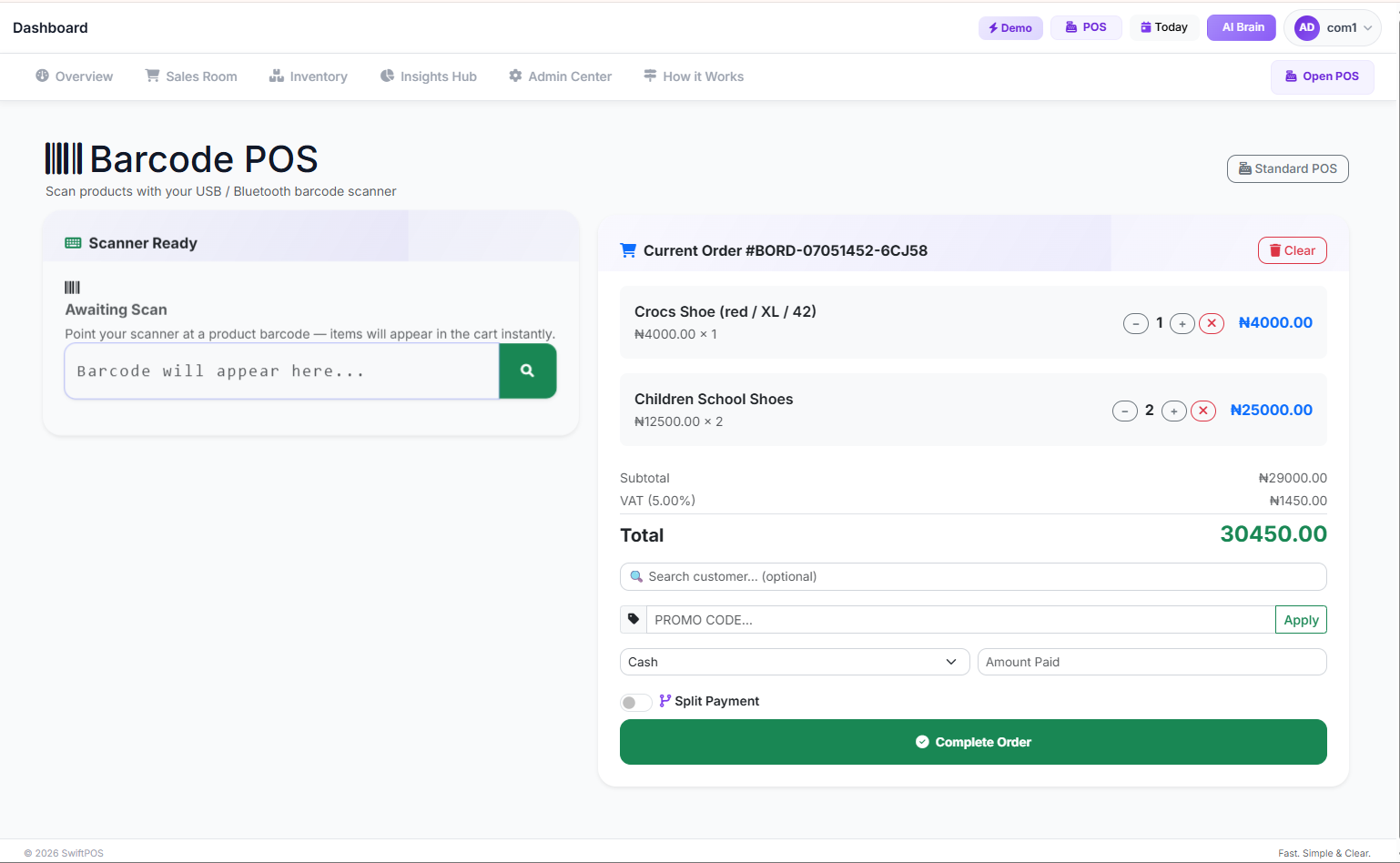 Barcode POS Interface
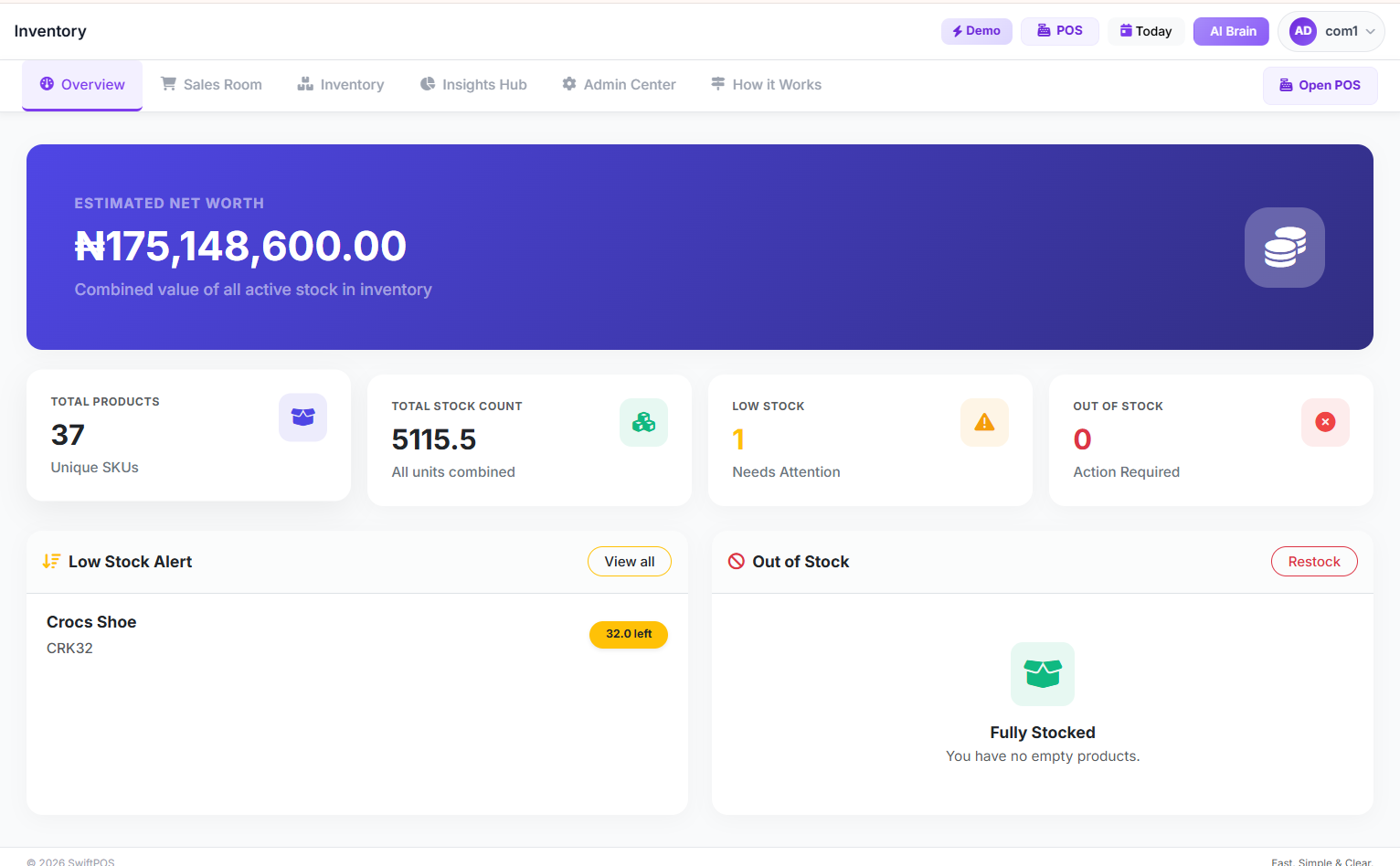 Inventory dashboard showing product stock levels
- Comprehensive Expense and Profit Tracking: SwiftPOS NG allows you to record all your operating expenses, from rent (₦80,000 - ₦2,000,000 annually) to generator fuel, staff salaries (₦40,000 - ₦120,000 monthly per person), and even bank charges. By categorizing these, the system calculates your true net profit, not just gross sales, giving you a clear picture of your actual financial health. This helps combat the feeling of having sales but no profit.
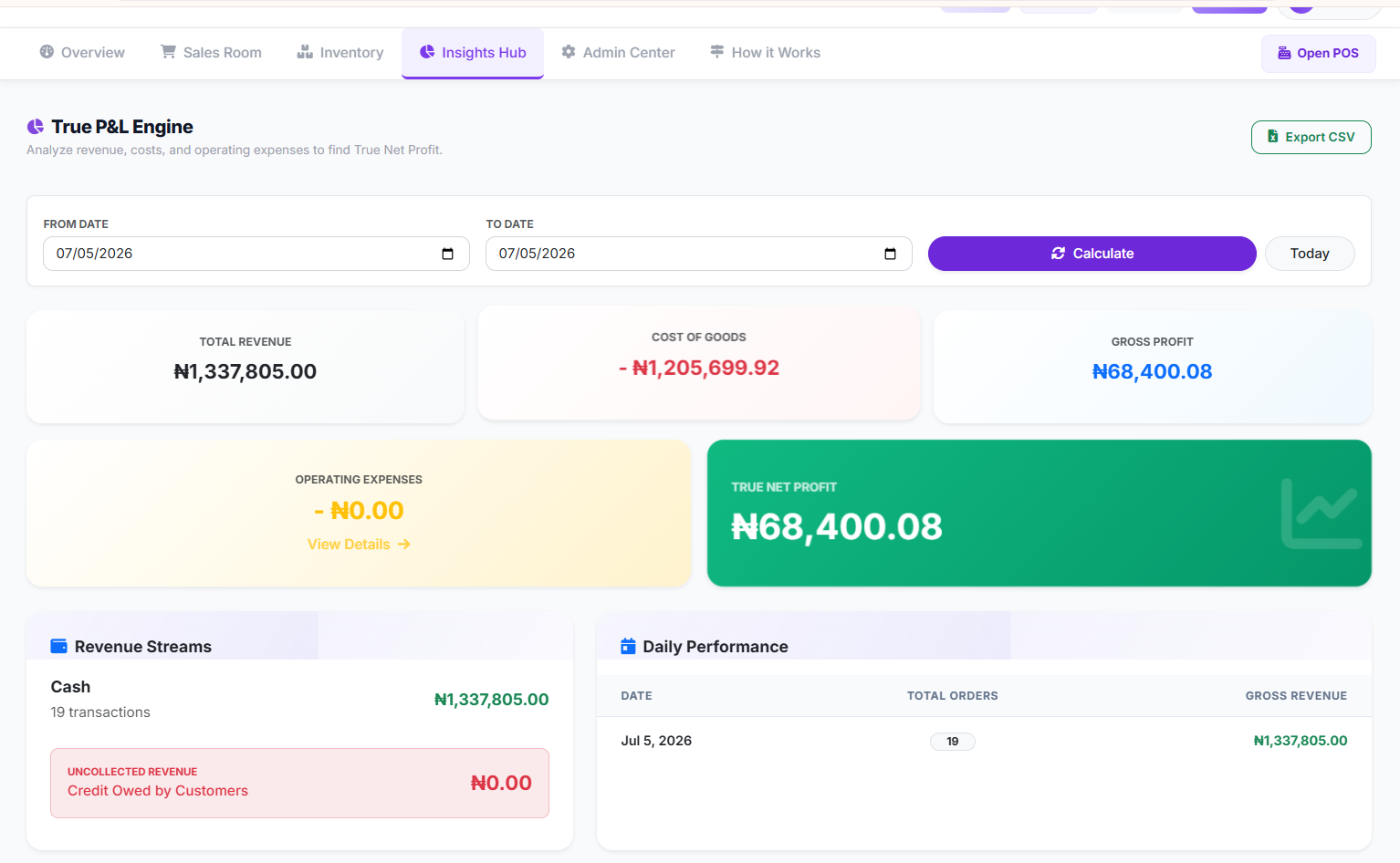 Profit and Loss page showing financial breakdown
- Customer and Credit Management: For businesses offering credit, SwiftPOS NG provides a robust customer credit book, allowing you to track outstanding debts, partial payments, and full settlements. This ensures better management of receivables and improves your shop cash flow. You can view your at a glance.
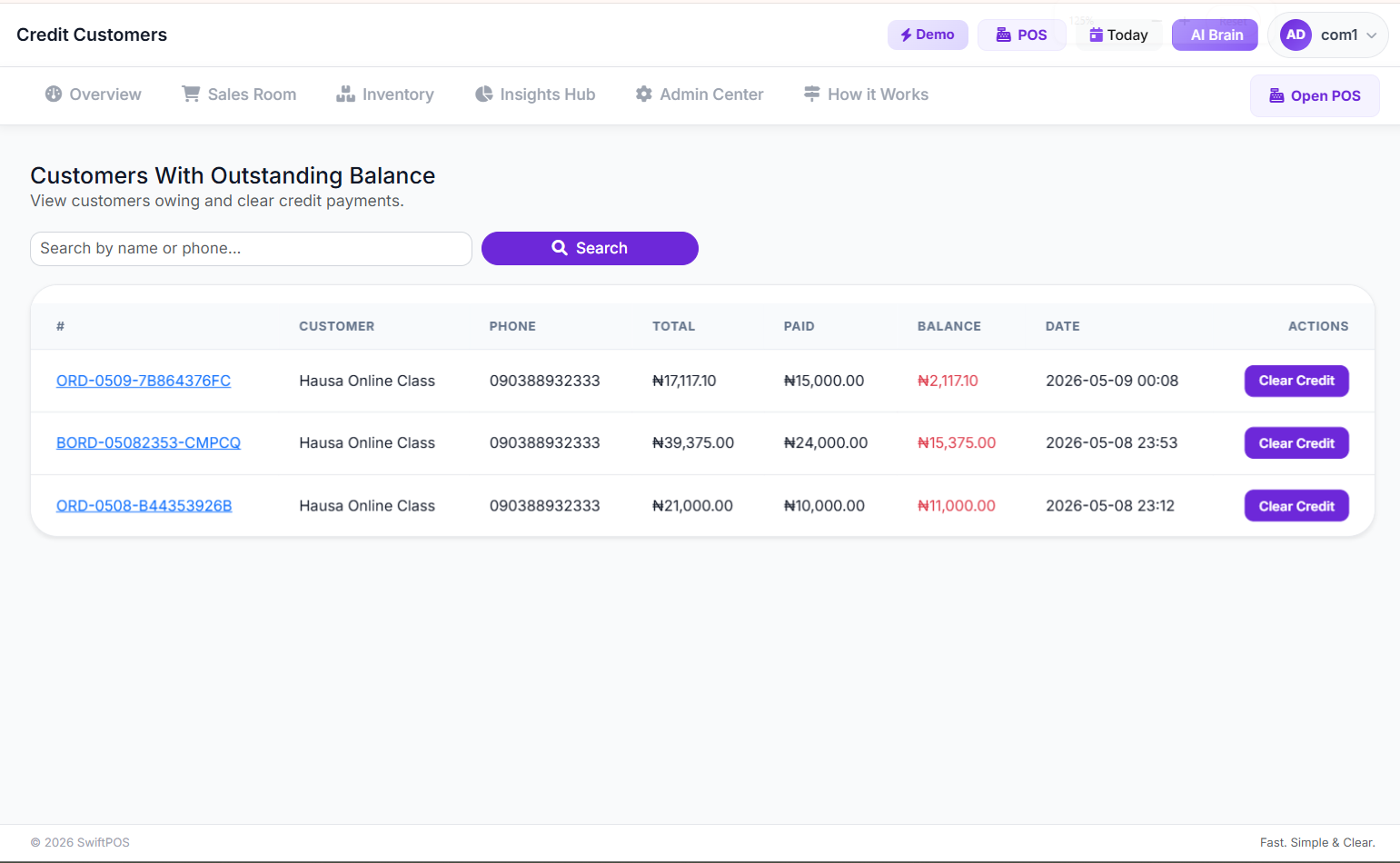 Credit Customers List Page
 - Staff Performance & Security: Assign different roles and permissions to your staff, ensuring cashiers only have access to what they need. The system tracks all staff activity, flagging suspicious actions like excessive voids or discounts, which helps prevent internal business cash leakage. Learn more about How to Set Staff Access Permissions.
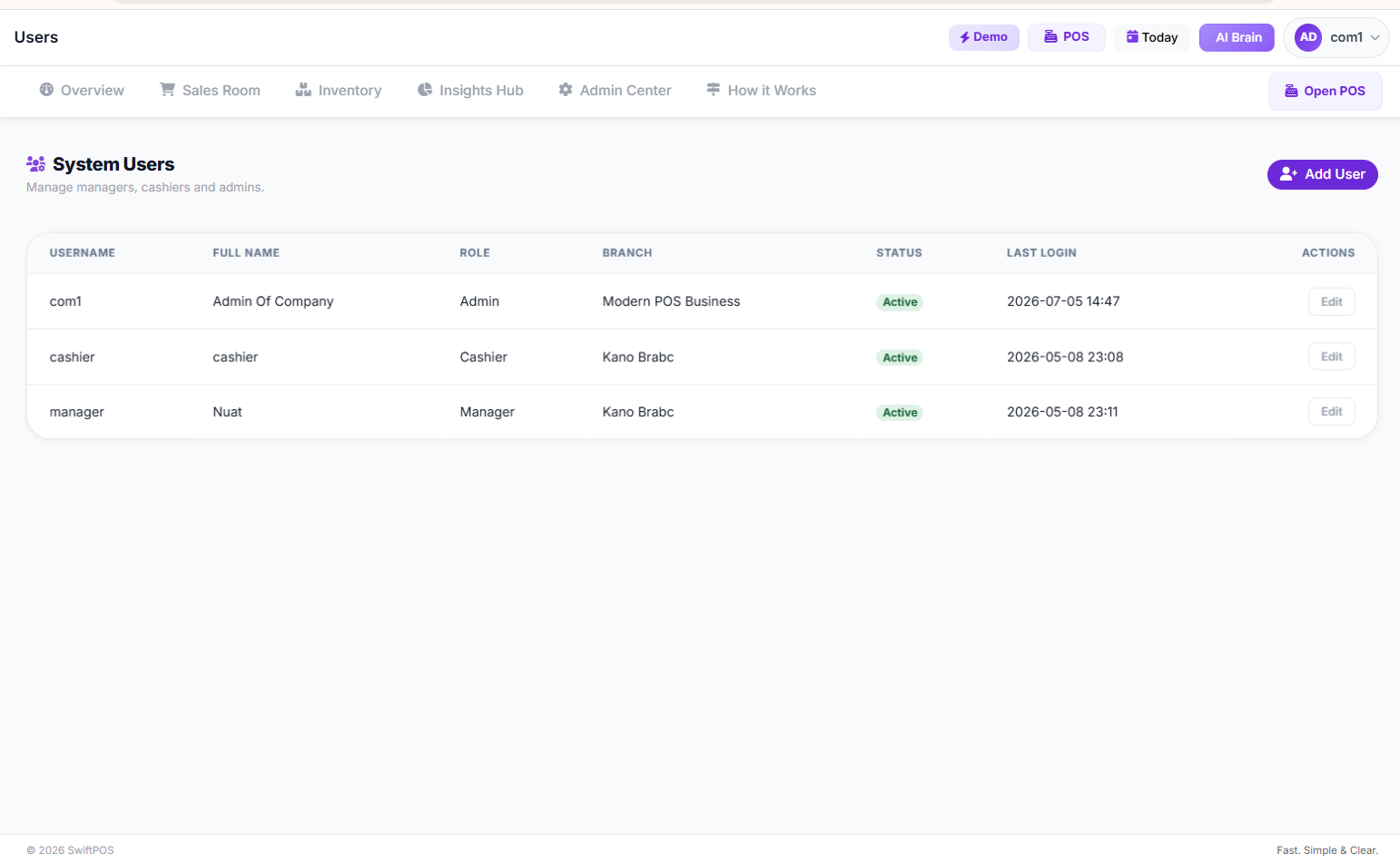 Staff users management page
- Multi-Branch & Warehouse Capabilities: If you operate multiple outlets or a central warehouse, SwiftPOS NG seamlessly manages stock transfers, separate inventory levels for each location, and unit conversions (e.g., cartons to pieces). This is essential for scaling your business efficiently. Discover more in our guide on Multi-Branch Retail: Seamless Operations & Profitability.
- Business Insights & Forecasting: The platform provides smart stock forecasting, alerting you to low stock risks or overstocked items, helping you make informed purchasing decisions. It also offers insights into sales trends and product performance, crucial for increasing sales and profitability.
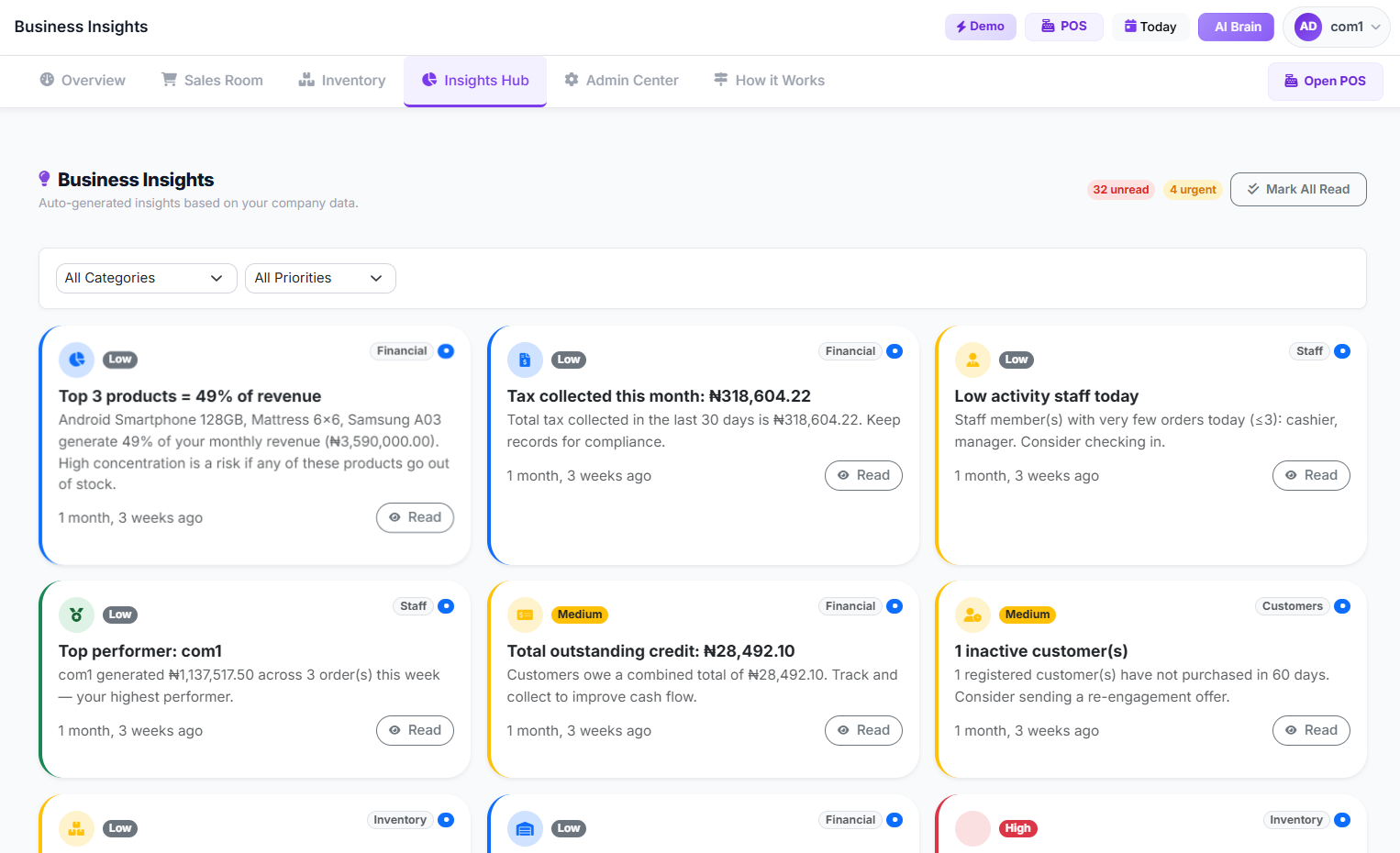 Business Insights page displaying key metrics
By consolidating these functions, SwiftPOS NG gives you the clarity and control needed to ensure that your sales efforts truly translate into tangible profit. It's about empowering you to understand the true financial health of your business, not just its turnover.
> "In the Nigerian retail landscape of 2026, the difference between 'busy' and 'profitable' often hinges on the quality of your business data and the efficiency of your operations."
Proof: Side-by-Side Comparison
Let's look at how an integrated system like SwiftPOS NG directly addresses the challenges faced by businesses using traditional methods.
| Feature | Traditional Methods (Manual/Excel) | SwiftPOS NG (Integrated System) |
|---|---|---|
| Inventory Tracking | Manual counting, prone to errors, delayed updates, high shrinkage. | Real-time updates, automated stock adjustments, expiry date tracking, low-stock alerts. |
| Sales Reporting | Daily tallying, weekly summaries, difficult to analyze trends, prone to miscalculation. | Instant sales reports, shift summaries, product performance analysis, trend identification. |
| Profit Calculation | Gross sales focus, expenses often overlooked or estimated, true net profit unclear. | Automated COGS tracking, comprehensive expense management, clear gross and net profit reports. |
| Cash Flow Insights | Dependent on memory or basic ledger, difficult to track receivables, delayed payments. | Real-time customer credit management, payment history, better control over outstanding debts. |
| Staff Management | Trust-based, limited accountability, difficult to detect errors or theft. | Role-based permissions, manager approvals, audit logs of all staff activities, suspicious activity alerts. |
| Multi-Branch | Separate records per branch, complex manual reconciliation, inconsistent data. | Centralized management, real-time stock transfers, unified reporting across all branches. |
| Time Efficiency | Significant time spent on data entry and reconciliation. | Automated processes, freeing up time for strategic tasks and customer engagement. |
| Error Reduction | High potential for human errors, leading to financial discrepancies. | Minimized human error through automation and validation. |
| Decision Making | Based on intuition or outdated data, reactive. | Data-driven insights, proactive strategic planning, informed decisions. |
As you can see, the contrast is stark. Moving from traditional, fragmented methods to an integrated system like SwiftPOS NG is not just an upgrade; it's a fundamental shift towards more efficient, secure, and ultimately, more profitable business operations. For more on this, read about Traditional Bookkeeping vs. POS Software: Real Costs for Nigerian Retailers.
Frequently Asked Questions
Q1: What is the biggest reason my sales don't translate into profit?
The biggest reason is often a lack of clear visibility into your true costs and operational inefficiencies. Many businesses focus on gross sales without accurately tracking Cost of Goods Sold (COGS), operating expenses, inventory shrinkage, or uncollected credit. This leads to retail profit problems where the margin after all costs is much smaller than perceived, or even negative.
Q2: How much does implementing a system like SwiftPOS NG cost for a small retailer in Nigeria?
The cost varies depending on the features and scale your business needs. SwiftPOS NG offers different subscription plans to suit various business sizes. While there's an investment, the return on investment (ROI) from reduced losses, improved efficiency, and better decision-making often far outweighs the cost. You can explore transparent pricing details on the SwiftPOS NG Pricing page. Remember, the Hidden Costs of Manual Retail Operations often far exceed the cost of a modern system.
Q3: Can SwiftPOS NG help if I have multiple branches or a warehouse?
Absolutely. SwiftPOS NG is designed to support multi-branch operations and central warehouses. You can manage separate stock balances for each location, transfer inventory between branches or from your warehouse, and get a consolidated view of sales and performance across all your outlets. This makes scaling your business much simpler and more profitable. Learn more about its features.
Q4: What if my internet connection is unreliable? Can the system still work?
Yes, SwiftPOS NG is built with Nigeria's connectivity challenges in mind. Critical Point-of-Sale (POS) operations can continue to function offline. Sales transactions are recorded locally and then automatically synchronized with the cloud once an internet connection becomes available. This ensures your business keeps running without interruption, preventing lost sales. You can read more about offline POS capabilities.
Q5: How does this system help prevent staff theft or errors?
SwiftPOS NG implements robust staff management features. You can set specific permissions for each staff member, ensuring they only access what's necessary for their role. Sensitive actions, like price overrides or voiding sales, can require manager approval. The system also maintains an audit log of all activities and can flag suspicious patterns, helping you identify and address potential issues promptly, thereby reducing business cash leakage.
Ready to turn your sales into real profit? Take control of your inventory, expenses, and overall business performance.

How to Calculate Your Retail Shop's True Profit (A Ste…
Sep 16, 2026
How to Calculate Supermarket Profitability in Nigeria:…
Sep 15, 2026
How to Open a Supermarket in Nigeria with ₦5 Million (…
Sep 14, 2026