How Much Does It Cost to Open a Pharmacy in Nigeria?
SwiftPOS Team
Published September 23, 2026

The dream of owning a pharmacy in Nigeria is compelling, offering a vital service and significant earning potential. Yet, many aspiring pharmacists and entrepreneurs underestimate the substantial capital required, leading to stalled plans or undercapitalized ventures. Understanding the true pharmacy startup cost Nigeria demands is the first step toward a successful launch in 2026.
Modern pharmacy interior with medicine shelvesThe Evolving Landscape of Pharmacy Business in Nigeria (2026)
The pharmaceutical sector in Nigeria is experiencing dynamic growth, driven by an increasing population, rising health awareness, and a growing middle class. However, it's also a highly regulated industry with specific requirements from bodies like the Pharmacists Council of Nigeria (PCN). In 2026, entrepreneurs face both opportunities and challenges. The digital transformation sweeping across retail is also impacting pharmacies, with many moving beyond manual record-keeping to embrace technology for efficiency and compliance. The average Nigerian consumer is becoming more discerning, expecting not just genuine medication but also professional service and convenient shopping experiences. This shift necessitates a robust business plan that accounts for both regulatory adherence and modern operational demands. For a deeper dive into retail trends, explore our insights on How To Scale Your Retail Business With Technology In Nigeria (2026 Guide).
What You Need Before You Start
Embarking on a pharmacy business requires meticulous planning and a clear understanding of the prerequisites. Here’s a quick checklist of essentials before you even consider the financial outlay:
- Pharmacist Registration: Valid license from the Pharmacists Council of Nigeria (PCN).
- Business Plan: A comprehensive plan outlining your vision, market analysis, operational strategy, and financial projections.
- Location Strategy: Research into high-traffic, accessible areas with adequate demand for pharmaceutical services.
- Initial Capital: A realistic estimate of funds covering all startup and operational costs for at least the first 6-12 months.
- Regulatory Knowledge: Familiarity with PCN guidelines, NAFDAC requirements, and local government regulations.
- Supplier Network: Established relationships with reputable pharmaceutical wholesalers and distributors.
Step-by-Step: How Much Does It Cost to Open a Pharmacy in Nigeria?
Understanding the precise pharmacy investment required involves breaking down the process into key cost centers. This detailed guide provides realistic figures for 2026, offering both low-end (small town/starting out) and high-end (prime Lagos/Abuja commercial) estimates.
Step 1: Business Registration and Licensing
The very first step is formalizing your business. This involves registering your company and obtaining the necessary permits.
Corporate Affairs Commission (CAC) Registration: This is mandatory for any business in Nigeria. The cost varies depending on the business structure (e.g., sole proprietorship vs. limited liability company).
- Cost: ₦25,000 - ₦70,000.
- Cost: ₦50,000 - ₦150,000.
- Cost: ₦15,000 - ₦25,000.
Step 2: Securing Your Location (Rent & Security Deposit)
Location is paramount for a pharmacy's success. High visibility and accessibility directly impact foot traffic and sales. Rent in Nigeria is typically paid annually, often with a security deposit equivalent to one year's rent.
Annual Shop Rent: This is a significant ongoing expense. Prices fluctuate wildly based on city, neighborhood, and size.
- Small Town/Rural: ₦80,000 - ₦300,000 per year.
- Urban/Prime Commercial (e.g., Lagos/Abuja): ₦1,000,000 - ₦2,500,000 per year.
- Cost: ₦80,000 - ₦2,500,000.
Step 3: Shop Renovation and Fitting
Once you have a location, it needs to be transformed into a functional and inviting pharmacy. This includes interior layout, shelving, counter space, and branding.
Renovation/Fitting: This can range from basic painting and minor repairs to a complete overhaul with modern finishes.
- Basic Setup: ₦300,000 - ₦800,000 (simple paint, basic tiling, functional counter).
- Modern/Air-conditioned Space: ₦1,000,000 - ₦3,000,000 (custom cabinetry, air conditioning, branded signage, comfortable waiting area).
- Basic Wooden Shelves: ₦100,000 - ₦250,000.
- Custom Metal/Glass Displays: ₦300,000 - ₦700,000.
- Simple Banner/Flex Sign: ₦50,000 - 100,000.
- Illuminated Signboard/Professional Branding: ₦150,000 - ₦300,000.
Step 4: Initial Drug Stock and Essential Equipment
This is often the largest component of your pharmacy startup cost Nigeria. A well-stocked pharmacy inspires confidence and ensures you can meet customer needs.
Initial Drug Stock: This is your core inventory. The amount depends on the size of your pharmacy and your target market.
- Small Community Pharmacy: ₦1,500,000 - ₦4,000,000.
- Well-Stocked Urban Pharmacy: ₦5,000,000 - ₦10,000,000.
- Cost: ₦150,000 - ₦400,000.
- Cost: ₦200,000 - ₦800,000.
Step 5: Technology and Operational Setup
Modern pharmacies leverage technology to manage inventory, sales, and customer data efficiently. This significantly reduces the hidden costs of manual operations.
Computer & POS System: A reliable computer and a robust Point-of-Sale (POS) system are critical for managing sales, inventory, and reporting.
- Basic Laptop & Software: ₦150,000 - ₦250,000.
- Dedicated POS Hardware & Advanced Software: ₦300,000 - ₦450,000.
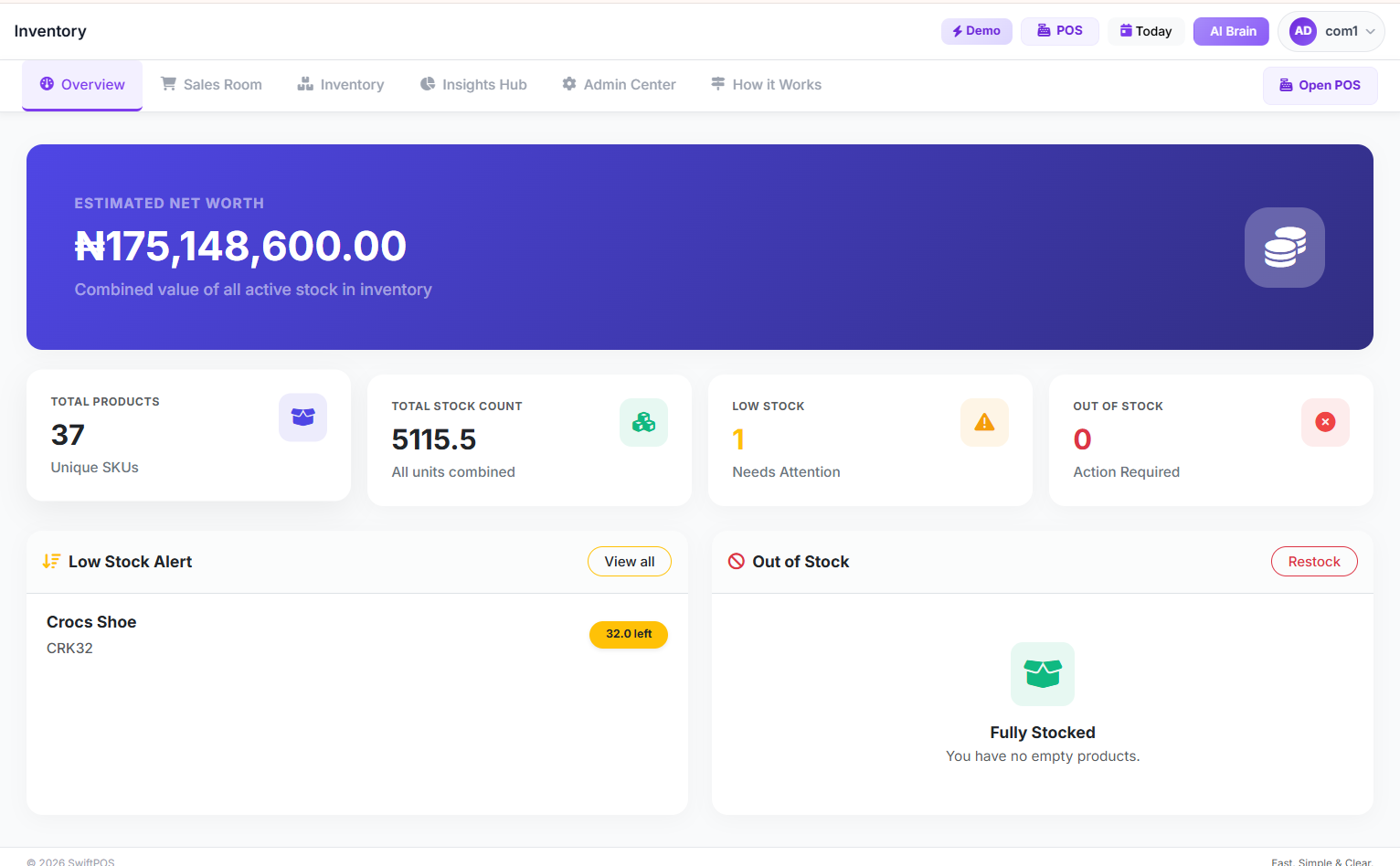 Inventory Dashboard
A good POS system isn't just a cash register; it's a central hub for your business. For instance, SwiftPOS offers features like managing product variants, setting wholesale pricing, and tracking stock by branch if you plan to expand. This kind of system helps prevent common Nigerian Retailers: Inventory Management Mistakes Crushing Your Profits.
Step 6: Staffing and Initial Salaries
Even if you are the superintendent pharmacist, you will likely need support staff.
Pharmacy Assistant/Sales Staff Salary: These are crucial for day-to-day operations.
- Entry-level (small town): ₦40,000 - ₦55,000 per month.
- Experienced (urban area): ₦60,000 - ₦80,000 per month.
- New Graduate: ₦120,000 - ₦180,000 per month.
- Experienced (major city): ₦200,000 - ₦250,000 per month.
Step 7: Contingency and Working Capital
No business plan is complete without a contingency fund. Unexpected expenses are common, especially in the early stages.
Contingency Fund: This should ideally cover 3-6 months of operating expenses.
- Recommended: 10-20% of your total estimated startup costs.
Summary of Estimated Pharmacy Investment (Startup Cost Nigeria - 2026):
| Item | Low-End Estimate (₦) | High-End Estimate (₦) |
|---|---|---|
| Business Registration (CAC & PCN) | ₦75,000 | ₦220,000 |
| Superintendent Pharmacist Annual License | ₦15,000 | ₦25,000 |
| Shop Rent (Annual) | ₦80,000 | ₦2,500,000 |
| Security Deposit (1 year rent) | ₦80,000 | ₦2,500,000 |
| Shop Renovation/Fitting | ₦300,000 | ₦3,000,000 |
| Initial Drug Stock | ₦1,500,000 | ₦10,000,000 |
| Refrigerator (Medical Grade) | ₦150,000 | ₦400,000 |
| Shelving & Display Units | ₦100,000 | ₦700,000 |
| Generator (Small/Medium) | ₦200,000 | ₦800,000 |
| Computer & POS System | ₦150,000 | ₦450,000 |
| Staff Salary (3 months for 1 assistant) | ₦120,000 | ₦240,000 |
| Superintendent Pharmacist Salary (3 months if not owner) | ₦360,000 | ₦750,000 |
| Marketing/Signage | ₦50,000 | ₦300,000 |
| Subtotal | ₦3,290,000 | ₦22,085,000 |
| Recommended 15% Contingency | ₦493,500 | ₦3,312,750 |
| Total Estimated Pharmacy Startup Cost | ₦3,783,500 | ₦25,397,750 |
These figures represent a comprehensive estimate for your pharmacy startup cost Nigeria. Remember, these are ranges, and careful budgeting can help you manage your pharmacy capital effectively.
> "The difference between a successful business and a struggling one often lies not in the brilliance of its idea, but in the meticulous planning and realistic funding of its execution."
Common Mistakes to Avoid
Starting a pharmacy is a significant undertaking. Sidestepping common pitfalls can save you time, money, and stress.
- Undercapitalization: Many businesses fail because they run out of money before they can become profitable. Always have a contingency fund.
- Poor Location Choice: A hard-to-find or inaccessible location, regardless of rent, will stifle growth.
- Ignoring Regulations: Non-compliance with PCN and NAFDAC regulations can lead to fines, temporary closure, or even loss of license.
- Inadequate Inventory Management: Overstocking leads to tied-up capital and expired drugs, while understocking results in lost sales. This is where tools for AI vs. Traditional Inventory: Real-Time Profit for Nigerian Businesses can be critical.
- Neglecting Technology: Relying on manual systems for inventory and sales in 2026 is inefficient, prone to errors, and makes scaling difficult. This often leads to Hidden Costs of Manual Retail Operations in Nigeria: What You're Missing Beyond POS.
- Lack of Marketing: Even a pharmacy needs to build awareness and trust within its community. Don't assume customers will just find you.
How to Track and Grow After Launch
Launching your pharmacy is just the beginning. Sustained growth requires diligent tracking and strategic decision-making.
Key Performance Indicators (KPIs): Monitor sales volume, average transaction value, inventory turnover rate, customer retention, and profit margins. A robust POS system provides these insights at your fingertips. For example, SwiftPOS offers detailed
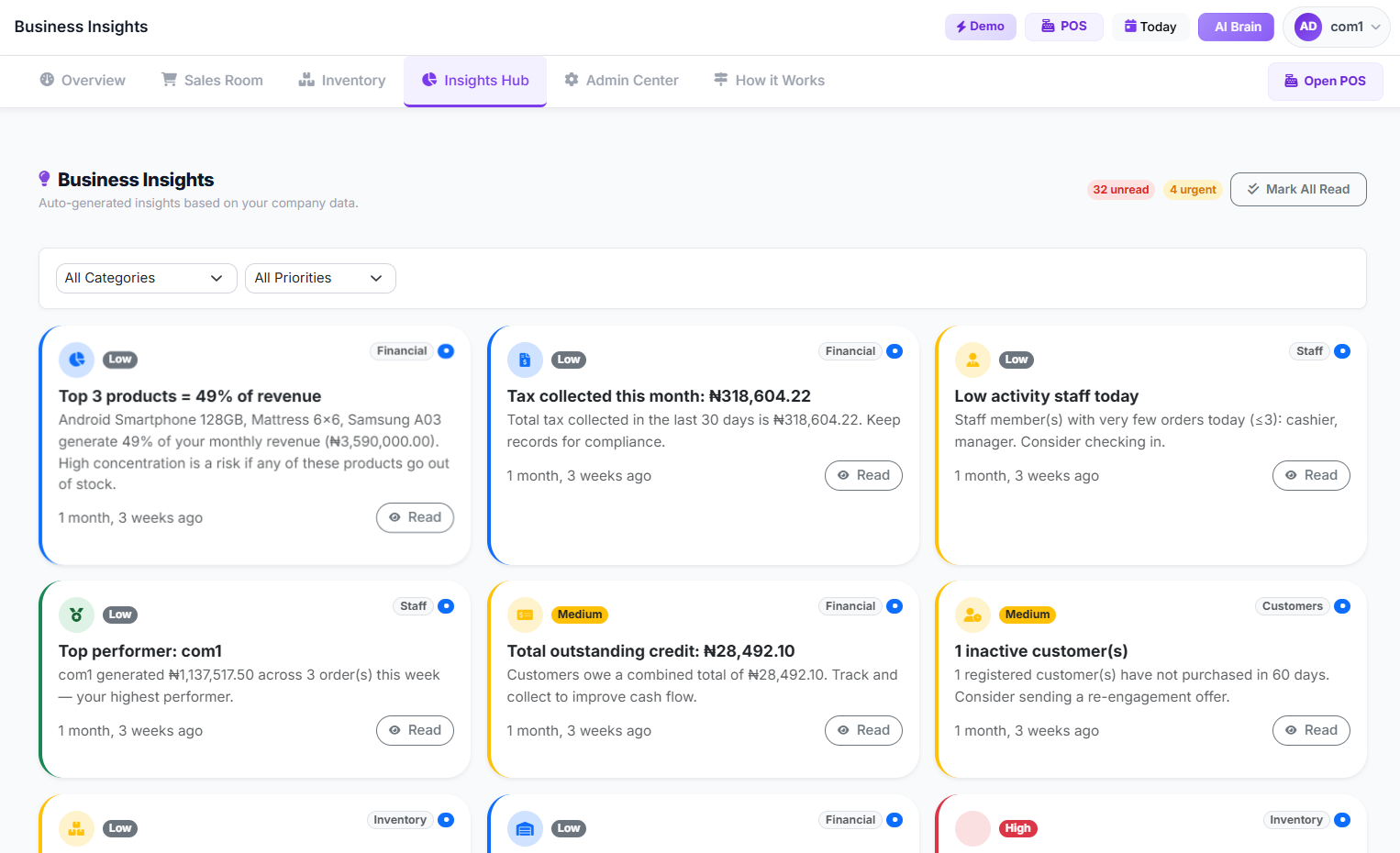 Business Insights PageBusiness Insights Page
Inventory Optimization: Use sales data to forecast demand and optimize your stock levels. Systems with stock forecasting capabilities, like SwiftPOS, can warn you about low stock and identify slow-moving or dead stock, preventing losses from expired products. This is critical for pharmacies dealing with expiry dates. Learn more about How to Predict When Products Will Run Out of Stock in Nigeria: A Practical Guide for Shop Owners.
Customer Relationship Management (CRM): Build a loyal customer base by offering excellent service, managing customer data, and potentially implementing loyalty programs. Understanding your customers helps you tailor your stock and services.
Expense Management: Continuously track your operating expenses to ensure profitability. SwiftPOS allows you to record and categorize expenses, giving you a clear picture of your true net profit after all overheads. This helps you avoid 7 Revenue Leaks: Mistakes Costing Nigerian Retailers Thousands (and How to Fix Them).
Staff Training and Motivation: Invest in your staff. Well-trained and motivated employees provide better customer service and contribute to a positive store environment. Utilize the
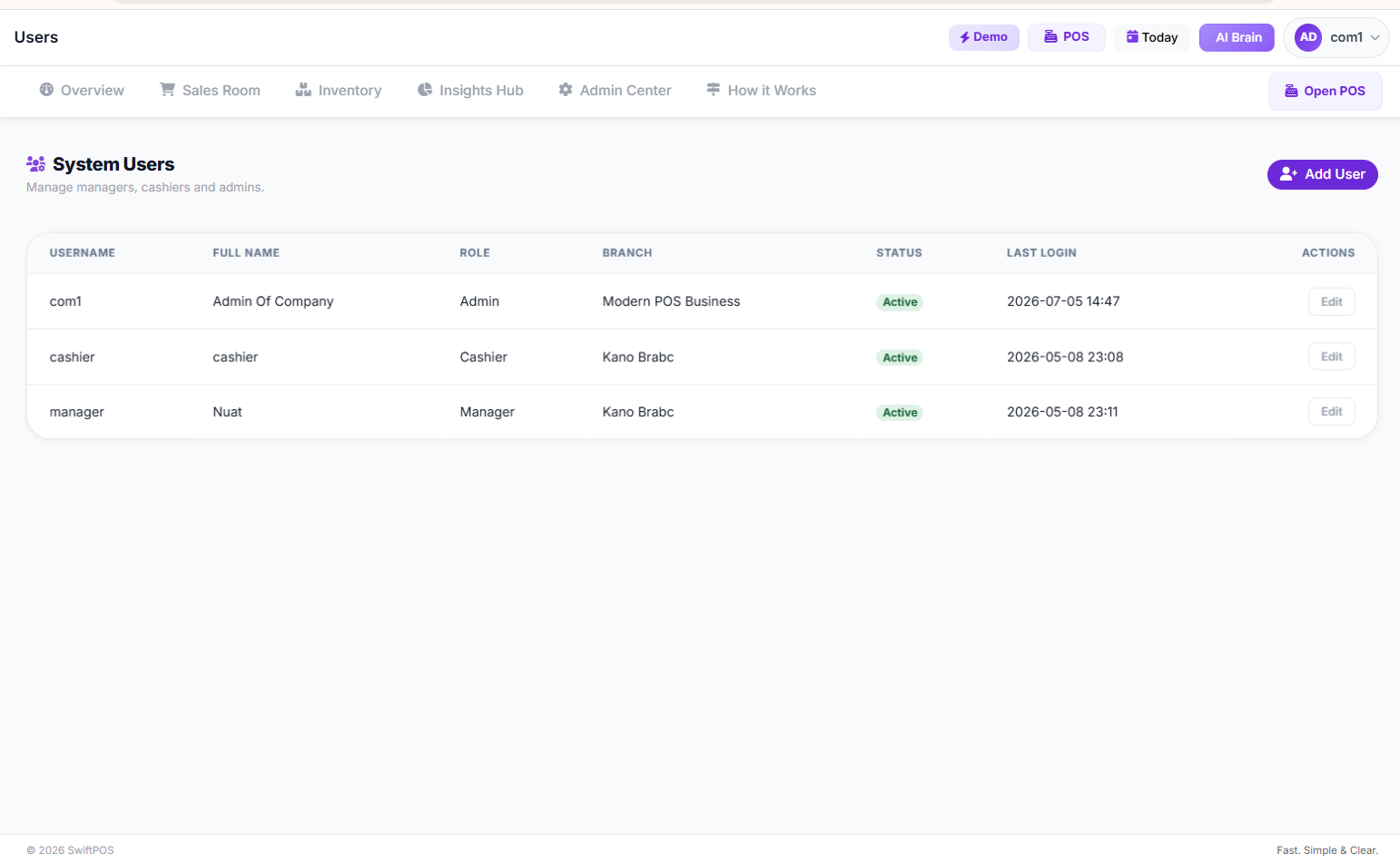 Staff Users Managemnet Page
 Business owner counting naira notes at desk
Frequently Asked Questions
Q1: Is it profitable to open a pharmacy in Nigeria?
Yes, a well-managed pharmacy in a good location can be very profitable. The demand for healthcare products and services is consistently high. Profitability depends on efficient inventory management, competitive pricing, excellent customer service, and effective cost control. Factors like the initial pharmacy investment and ongoing operational costs directly impact your profit margins.
Q2: What are the main challenges for new pharmacies in Nigeria?
Key challenges include high startup capital, intense competition, managing expired stock, power instability (necessitating generators), navigating complex regulations, and sourcing genuine products. Effective management and leveraging technology can mitigate many of these issues.
Q3: How long does it take to get a pharmacy license in Nigeria?
The process can vary, but typically, obtaining all necessary registrations and licenses from CAC and PCN can take anywhere from 3 to 6 months, sometimes longer, depending on how quickly all requirements are met and documentation is processed.
Q4: Can I start a pharmacy without being a pharmacist?
No. According to PCN regulations, every pharmacy must have a Superintendent Pharmacist who is a registered and licensed pharmacist, responsible for the professional and ethical conduct of the pharmacy. If you are not a pharmacist, you must employ one to oversee operations.
Q5: What is the average monthly turnover for a small pharmacy in Nigeria?
A small, well-run pharmacy in a decent location might see monthly turnovers ranging from ₦800,000 to ₦3,000,000 or more, especially if it offers a good range of products and services. However, this is highly dependent on factors like location, product mix, and customer traffic. Remember that turnover is not profit; you must subtract your cost of goods sold and operating expenses to determine actual profitability.
Q6: What's the biggest drain on pharmacy profits?
Poor inventory management and expired stock are major profit drains. Products with expiry dates, like medicines, become a liability if not sold in time. Theft and pilferage, as well as inefficient staff management, also contribute significantly to lost revenue. This highlights why effective inventory and staff controls, as offered by comprehensive POS systems, are crucial.
Ready to Streamline Your Pharmacy Operations?
Understanding the comprehensive pharmacy investment and navigating the operational complexities are critical for success. Once your pharmacy is up and running, efficient management becomes key. If you're looking for a robust system to manage your sales, inventory, staff, and finances, consider exploring SwiftPOS NG. It offers a complete suite of tools designed for Nigerian retailers, helping you track every Naira and every product, ensuring your hard-earned pharmacy capital yields maximum returns. Visit our features page to see how SwiftPOS can transform your retail business.

How to Prevent Inventory Shrinkage in Retail: A Comple…
Sep 22, 2026
Assisted Self-Checkout for Retailers: How It Works & W…
Sep 20, 2026
10 Reasons Nigerian Retailers Lose Money (and How to F…
Sep 19, 2026