
How to Calculate Net Profit After Expenses: A Step-by-Step Guide

Everyone tells you that to know your business profit, all you need to do is subtract your costs from your sales. Simple, right? Well, that's what they say, but honestly, it’s a half-truth that's probably costing you money. If you really want to understand your business and how to calculate net profit after expenses, you need to dig deeper than just "sales minus costs." You see, there's a big difference between seeing money come in and actually keeping it. And in Nigeria, where every kobo counts, mistaking gross profit for net profit is a fast track to business trouble. I’m here to tell you why that common advice is incomplete and how you can truly understand what your business is really making as of 2026.
Shop owner reviewing financial reports on a tabletThe Reality Check: What Nobody Tells You About Profit Tracking
The biggest lie you've been sold is that profit is just about sales. You get excited when you see ₦500,000 in your bank account from sales, right? You feel like you're doing well. But then, you look at your wallet, and it's almost empty. Where did the money go? That’s the reality check. Most small business owners in places like Balogun Market or Onitsha Main Market focus heavily on sales volume, thinking high sales automatically mean high profit. They often overlook the creeping costs that erode their earnings.
Let's talk about the difference between gross profit and net profit calculation. Your gross profit is simply your total sales revenue minus the direct cost of the goods you sold. So, if you bought a carton of biscuits for ₦10,000 and sold all of them for ₦15,000, your gross profit is ₦5,000. Sounds good, right? But that ₦5,000 is not what you can take home. Not even close.
That's where business expenses come in. These are the indirect costs you incur to run your business, irrespective of how many items you sell. Things like rent for your shop in Surulere, which could be anywhere from ₦80,000 to ₦180,000 annually in a prime spot, or even ₦8,000 in a small town kiosk. Then there’s staff salary – your sales assistant in a small provision store might earn ₦45,000 a month, while an experienced retail staff in a busy Lagos boutique could be on ₦80,000. These are real, unavoidable costs. If you're not factoring them in, you're not getting a true picture of your retail net profit. You're just playing guessing games with your finances.
A study recently showed that over 60% of small businesses in Nigeria fail within their first five years, and a major reason is poor financial management, especially a lack of proper profit tracking. They focus on gross revenue and forget to account for everything else. My own experience managing retail shops for 12 years taught me this the hard way. I remember one December, a month of fantastic sales. I felt rich! Then January came, and I had to pay rent, salaries, and restock. Suddenly, the "profit" I thought I had was gone. It was a painful lesson in understanding true net profit.
What You Actually Need to Get Started
You don't need a fancy accounting degree to calculate your net profit. What you need is discipline and the right tools. Forget those dusty ledger books or complicated Excel sheets that crash every other day. This is 2026, not 1999.
Here’s a brutally honest list of what you actually need:
Non-Negotiables:
- A Clear Record of All Sales: Every single transaction, no matter how small. This is your starting point. You need to know exactly how much money came in from selling your products.
- Accurate Cost of Goods Sold (COGS): For every item you sell, you need to know what it cost you to acquire or produce. This is crucial for calculating your gross profit margin. If you bought 20 bags of rice for ₦15,000 each and sold them for ₦18,000, your COGS is ₦15,000 per bag. Simple.
Monthly Shop Rent: Range from ₦8,000 (small town kiosk) to ₦180,000 (prime Lagos street shop) annually*. Divide by 12 for monthly impact.
- Monthly Staff Salary (Entry-level): ₦45,000 to ₦80,000 per staff.
- Monthly Utility Bills (Electricity, Water, Waste): ₦5,000 to ₦30,000 (for a medium-sized shop with appliances).
- Monthly Internet/Data Costs: ₦3,000 to ₦10,000 (for dedicated broadband).
- Monthly Transportation/Logistics for Stock: ₦7,000 to ₦50,000 (from local market trips to inter-city haulage).
- Monthly Marketing/Advertising (Local): ₦2,000 to ₦25,000 (for social media boosts or local flyers).
- Monthly Bank Charges/Transaction Fees: ₦1,000 to ₦8,000 (depending on transaction volume).
- Monthly Miscellaneous/Contingency: ₦5,000 to ₦20,000 (for unexpected repairs or small supplies).
- A System to Bring It All Together: You can't just have these numbers floating around. You need a centralized place to input, track, and analyze them. This is where a good business management system becomes your best friend.
- Dedicated Business Account: Stop mixing your personal money with your business money. It makes tracking impossible.
- Basic Financial Literacy: Understanding terms like revenue, expenses, assets, and liabilities will make everything clearer. You don't need to be an accountant, just grasp the fundamentals.
- A Mentor or Consultant: Someone who has walked this path before can save you from costly mistakes.
The Complete Step-by-Step Breakdown
Alright, let's break down how you actually calculate net profit after business expenses. This isn't rocket science, but it requires diligence.
Step 1: Calculate Your Total Revenue
This is the easiest part. Total revenue is all the money you've collected from selling your products or services over a specific period – usually a month or a quarter. Every single sale counts.
For example, if you run a mini-mart in Ikeja and your total sales for October 2026 were ₦587,500, that's your revenue. Don't forget to include all payment methods: cash, POS, bank transfers, even customer credit that has been paid off. If you're still writing sales in a notebook, you’re missing out on vital insights. A system that automatically records every sale, like SwiftPOS NG, makes this step effortless. It captures every transaction, whether it's a cash payment, a card swipe, or a mobile transfer.
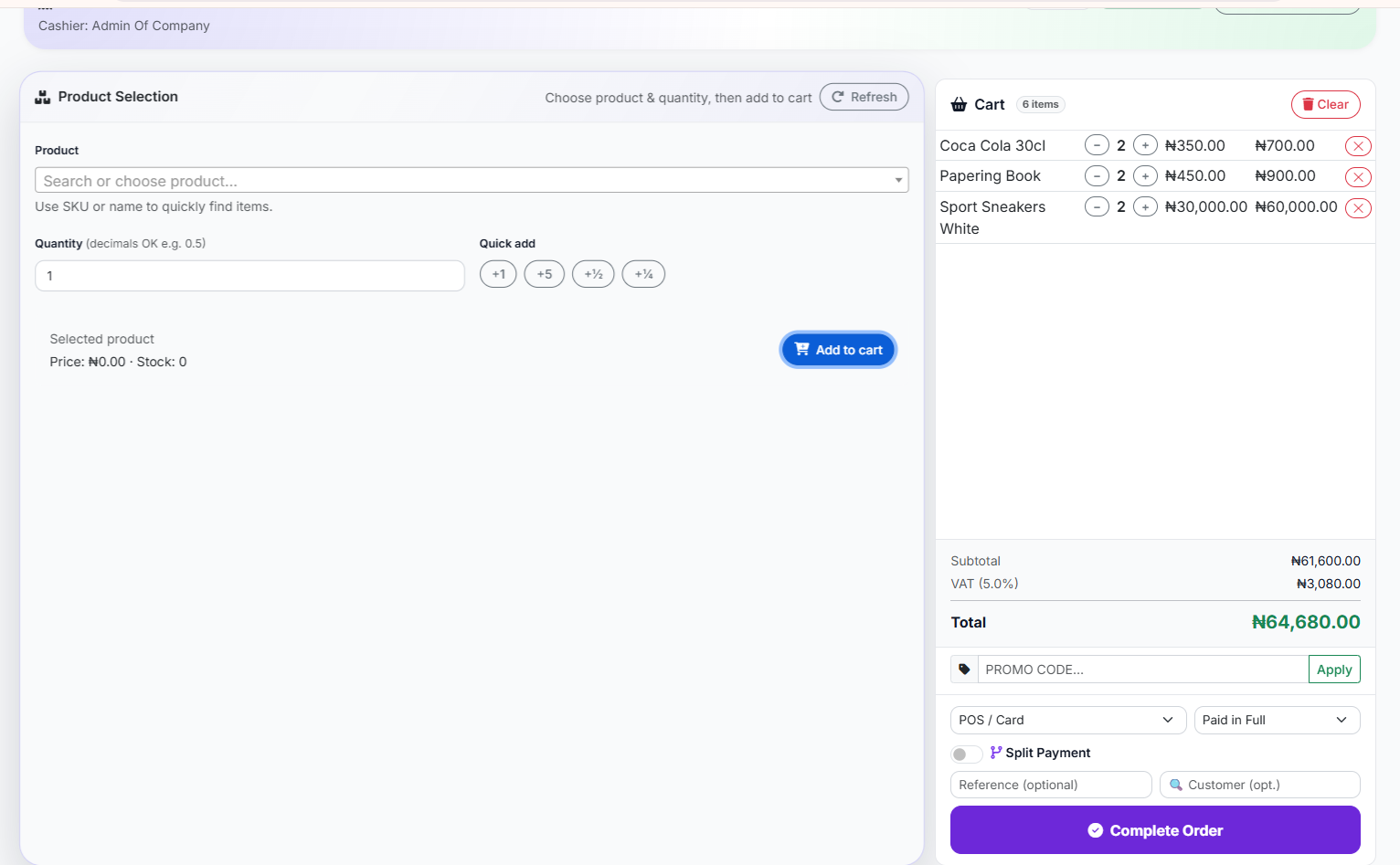 Classic POS Interface (List select)
Step 2: Determine Your Cost of Goods Sold (COGS)
This is where many business owners get confused. COGS is the direct cost attributable to the production of the goods sold by your business. For a retail shop, it’s simply what you paid for the inventory you actually sold during that period.
Let's say in October, you sold ₦587,500 worth of goods. You need to know what those specific items cost you. If you bought 50 bags of sugar at ₦8,000 each and sold 40 of them, your COGS for sugar is 40 bags ₦8,000 = ₦320,000. Do this for all products sold. This isn't about what you bought in October, but what you sold* from your inventory. Without accurate inventory tracking, this step is a nightmare. A good system will track product costs and quantities automatically.
Step 3: Calculate Your Gross Profit
Now, this is straightforward. Once you have your Total Revenue and your COGS, you just subtract.
Gross Profit = Total Revenue - Cost of Goods Sold
Using our example: ₦587,500 (Total Revenue) - ₦385,000 (let's assume this is your total COGS for all items sold) = ₦202,500. This ₦202,500 is your gross profit. It shows how much money you made from sales before you consider your operational expenses. It’s a good indicator of your product pricing strategy, but it’s not the full picture.
Step 4: Identify and List All Your Operating Expenses
This is the most critical step for understanding your true net profit. Operating expenses are the costs of running your business that are not directly tied to the products you sell. These are the bills you pay every month, no matter what.
Think about it:
- Rent: Your annual shop rent of, say, ₦1,200,000 in a decent commercial area in Ibadan translates to ₦100,000 per month.
- Salaries: If you have two staff members earning ₦60,000 each, that's ₦120,000.
- Utilities: Electricity, water, waste disposal. This could be ₦15,000 to ₦20,000 for a small shop.
- Internet/Data: Essential for POS and communication, maybe ₦7,500.
- Transportation/Logistics: For picking up stock, deliveries, etc. Perhaps ₦25,000.
- Marketing: A few thousand naira for social media boosts, ₦10,000.
- Bank Charges/Transaction Fees: These add up, let's say ₦3,000.
- Miscellaneous: Cleaning supplies, small repairs, generator fuel. Another ₦10,000.
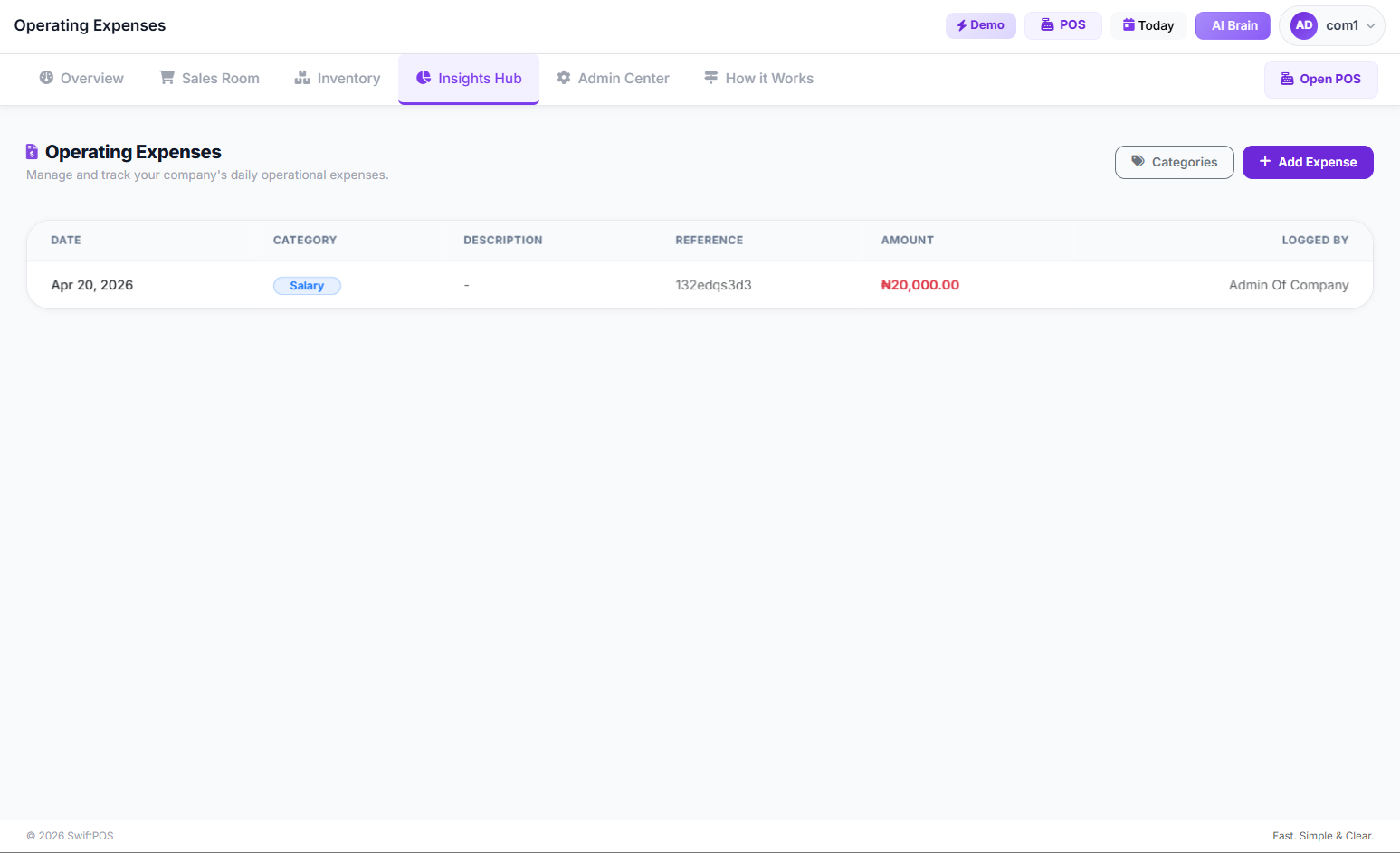 record and categorize all your business expenses
Step 5: Calculate Your Net Profit
Now for the moment of truth. To get your net profit, you subtract your total operating expenses from your gross profit.
Net Profit = Gross Profit - Total Operating Expenses
Using our example: ₦202,500 (Gross Profit) - ₦295,500 (Total Operating Expenses) = -₦93,000.
Wait, a negative number? Yes, you heard that right. In this hypothetical scenario, even with ₦587,500 in sales, the business made a loss of ₦93,000 for the month. This is the stark reality many business owners face but don't recognize because they only focus on sales. This is why learning how to calculate net profit after expenses is so crucial.
This is the kind of insight that changes everything for your business. It tells you if you're truly making money or just moving it around. If you’re manually doing this, it’s prone to errors and takes too much time. You need a system that does the heavy lifting for you. SwiftPOS NG provides a
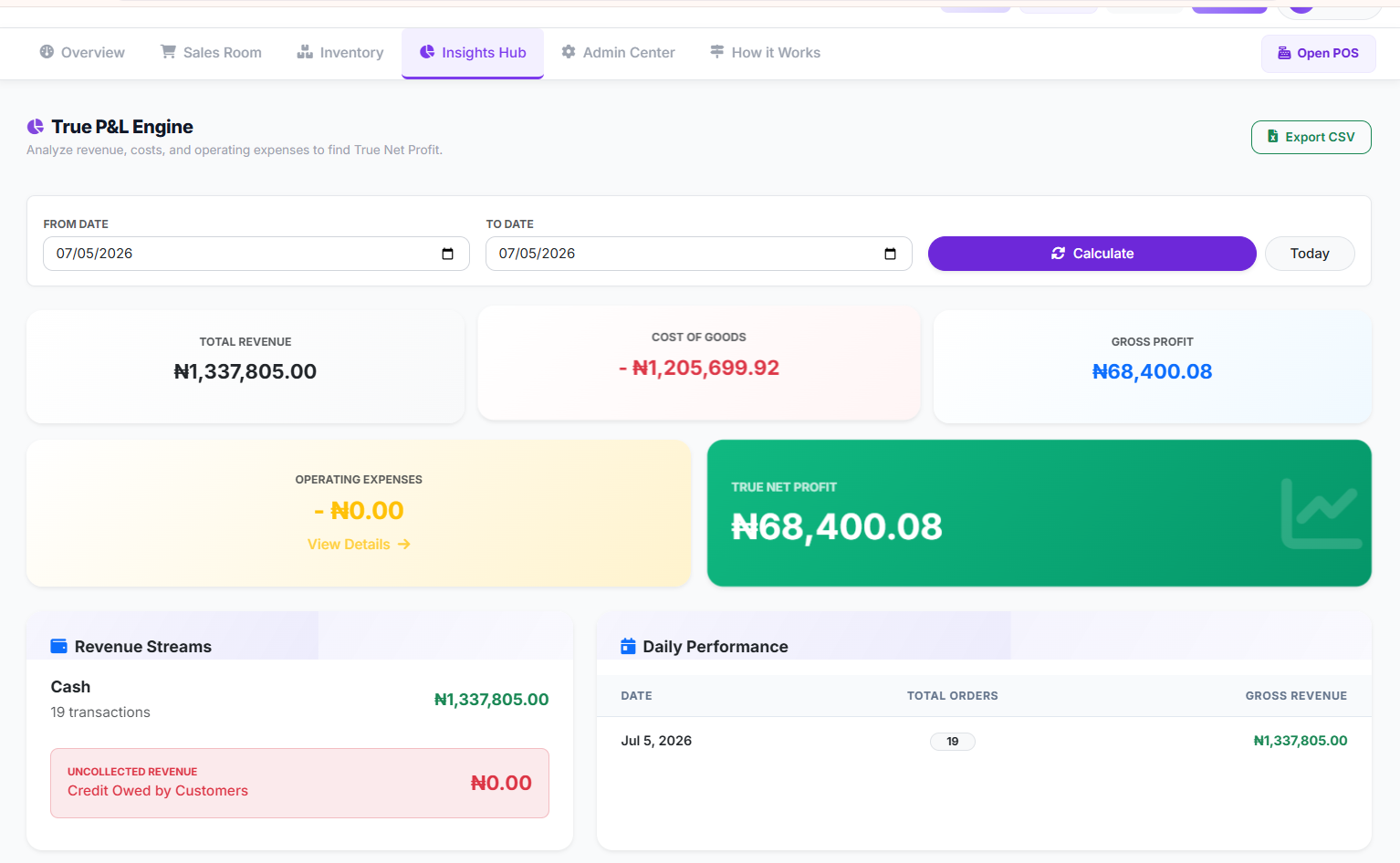 Profit and Loss PageProfit and Loss Page
5 Mistakes That Cost Nigerian Business Owners the Most
I've seen these mistakes time and again in my years managing shops and consulting with business owners. They are silent killers of profit.
- Mixing Business and Personal Funds: This is probably the most common mistake. You sell some goods, put the cash in your pocket, and use it to buy personal items without recording it. Then you use personal money to pay for shop supplies. Before you know it, you have no idea what belongs to the business and what belongs to you. This makes accurate profit tracking impossible. Get a separate bank account for your business. Today.
- Ignoring Small, Frequent Expenses: That daily transport fare, the sachet of water, the small tip to the market porter. They seem insignificant on their own, but they add up. Think about it: ₦500 a day for 30 days is ₦15,000. That's a staff’s weekly pay! Many manual record-keeping methods simply miss these small outflows, leading to an inflated sense of profit.
- Not Tracking Inventory Costs Accurately: If you don't know exactly what each item cost you, how can you know your gross profit? If you buy in bulk, then sell individually, you need to understand your unit cost. Many businesses round up or guesstimate, which throws off your entire net profit calculation. This is especially critical for businesses that deal with perishable goods or items with fluctuating prices, like those found in Mile 12 or Alaba International Market.
- Failing to Account for Depreciation: Your generator, your shelves, your POS machine – they don't last forever. They lose value over time. While not a cash expense every month, accounting for depreciation gives you a more realistic view of your long-term costs and true asset value. Most small businesses completely ignore this, thinking it's only for big corporations. It's not.
- Underpricing Due to Ignorance of True Costs: If you don't know your total operating expenses, you can't price your products correctly to ensure profitability. You might think selling an item for ₦2,000 is profitable because you bought it for ₦1,500. But when you factor in your share of rent, electricity, and staff salary for that one sale, you might actually be losing money. This is a common trap, especially for new businesses trying to compete on price in crowded markets like Computer Village.
How to Know If You're on Track (Success Metrics)
So, you've started calculating your net profit. How do you know if you're doing well? You need to look at a few key performance indicators (KPIs) and benchmarks.
- Positive Net Profit: This is the absolute first step. If your net profit is consistently negative, you're running at a loss. You need to either increase sales, reduce COGS, or cut down on operating expenses. There's no escaping this.
- Net Profit Margin: This is your net profit divided by your total revenue, expressed as a percentage. It tells you how much of every naira in sales you actually keep as profit. For many small retail businesses in Nigeria, a healthy net profit margin can range from 5% to 15%. If you're consistently below 5%, you need to re-evaluate your business model. For instance, a provision store might aim for 8-12%, while a luxury boutique could hit 15-20%.
- Expense-to-Revenue Ratio: This shows how much of your revenue is eaten up by expenses. Divide your total operating expenses by your total revenue. If this ratio is too high (e.g., more than 40-50% for a typical retail business), you have an expense problem. You need to find ways to reduce costs without impacting sales.
- Consistent Growth: Are your net profits growing month-on-month or quarter-on-quarter? Even small, consistent growth (say, 2-5% monthly) indicates you're on the right track. Don't just look at the raw numbers; look at the trend.
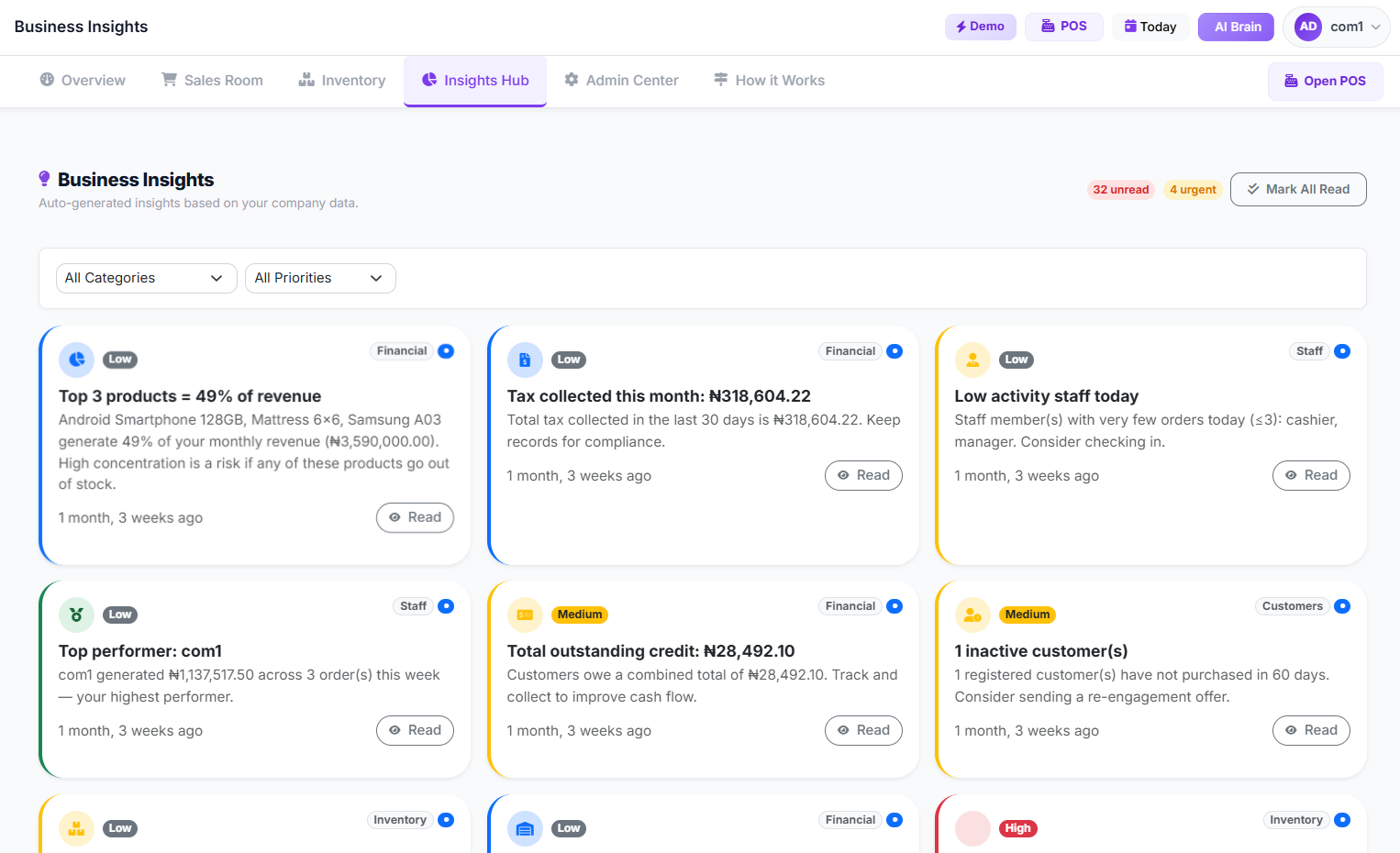 business insightsBusiness Insights Page
It shows you your net profit, gross profit, and expenses in real-time. No more guessing, no more waiting till month-end to realize you're in the red. You can make informed decisions today. You can even set up alerts for low stock or unusual activity, helping you fix problems before they become crises. This is how you run a smart business in 2026.
Blockquote:
> "Many small businesses operate on a treadmill, running hard but not moving forward. The key to breaking free is not just selling more, but understanding precisely where every kobo comes from and where it goes. Without that clarity, you're building on sand."
Real Questions People Ask (FAQ)
Q1: What's the difference between gross profit and net profit in simple terms for a Nigerian business?
Think of it like this: Gross profit is the money you have left after buying the goods you sell. So, if you bought a crate of soft drinks for ₦2,000 and sold them all for ₦3,000, your gross profit is ₦1,000. Net profit is what's left after you pay for everything else too – your shop rent, staff salaries, generator fuel, transport, and even that internet data for your POS. That ₦1,000 gross profit can quickly disappear when you account for all those other bills. It’s what you actually keep.
Q2: How often should I calculate net profit after expenses?
Ideally, you should aim to calculate your net profit monthly. This gives you a regular snapshot of your business's financial health and allows you to spot problems quickly. If you wait too long, like quarterly or annually, it might be too late to fix issues. Daily tracking might be too granular for a small business, but monthly is essential for proper profit tracking.
Q3: My net profit is consistently low or negative. What should I do first?
First, don't panic. This is why you're tracking it! Start by reviewing your operating expenses. Are there areas you can cut back? Maybe switch to a more affordable internet plan, negotiate with suppliers for better prices on stock, or optimize your logistics to reduce transportation costs. Next, look at your pricing. Are you charging enough to cover your costs and still make a reasonable margin? Sometimes, a slight price increase, coupled with excellent customer service, can make a big difference without driving customers away. Lastly, consider strategies to increase sales in your retail shop.
Q4: Is it really worth investing in a POS system just for net profit calculation?
Absolutely, yes! Think about the time you save. Instead of spending hours manually calculating your revenue, COGS, and all those individual business expenses, a good POS system does it automatically. It reduces errors significantly. More importantly, it gives you real-time data and insights you simply can't get from manual methods. You can see exactly where your money is going, identify your most profitable products, and understand your true retail net profit. This isn't just about calculation; it's about making smarter business decisions that lead to actual growth and more money in your pocket. It's an investment in your business's future, not just a fancy cash register.
Q5: What if I have multiple branches? Does this calculation change?
The core principle remains the same for multi-branch retail. You'll calculate revenue, COGS, and operating expenses for each branch individually to understand its specific profitability. Then, you can consolidate these figures to get an overall picture of your entire business. A robust POS system like SwiftPOS NG is designed to handle multiple branches, allowing you to track stock, sales, and expenses separately for each location, and then view consolidated reports. This way, you know which branches are thriving and which might need more attention.
Your Next Move
Look, I've been there. I know the grind of running a small business in Nigeria. You're busy. You're trying to make ends meet, keep customers happy, and manage staff. But ignoring your numbers, especially your true net profit, is like driving with your eyes closed. You might get lucky for a while, but eventually, you'll crash.
Stop guessing. Stop relying on incomplete information. It’s 2026, and the tools are available to make your life easier and your business more profitable. If you’re serious about understanding your business’s financial health and making informed decisions, it’s time to embrace proper financial tracking.
Take the first step today. Learn more about how SwiftPOS NG can help you manage your sales, track your expenses, and calculate your true net profit automatically. Visit SwiftPOS NG and see how easy it is to finally get a clear picture of your business.
Written by SwiftPOS Team
Practical guides from the retail specialists at Nura Mustapha Technologies Limited, for modern Nigerian merchants.