10 Reasons Nigerian Retailers Lose Money (and How to Fix It)
SwiftPOS Team
Published September 19, 2026

Are you constantly wondering where your profits are disappearing to, even with a steady stream of customers? Does it feel like your business is a leaky bucket, losing precious Naira faster than you can pour them in? You're not alone. Many Nigerian retailers face these challenges daily, struggling to pinpoint the hidden drains on their revenue.
A nigerian retail shop owner looking stressed whileThe Silent Saboteurs: How Manual Operations Bleed Your Business Dry
In 2026, relying on manual record-keeping or basic spreadsheets is like trying to cross the Lagos Lagoon in a canoe when everyone else is using a speedboat. While it might seem like a cost-saving measure, the reality is that traditional methods introduce significant risks and inefficiencies that directly impact your bottom line. These hidden costs can accumulate rapidly, turning potential profits into avoidable losses. For instance, the annual cost of managing inventory manually, accounting for errors and inefficiencies, can easily reach ₦500,000 to ₦1,500,000 for a medium-sized retail shop, as highlighted in our article on the Hidden Costs of Manual Retail Operations in Nigeria.
Consider the time spent by staff on counting stock, reconciling cash, or chasing customer debts. This isn't just wasted time; it's lost opportunity to serve customers, strategize sales, or improve your shop's appeal. Furthermore, the lack of real-time data means you're making critical business decisions based on outdated or incomplete information, which is a recipe for business mistakes. This issue is particularly prevalent in Nigeria, where fluctuating market conditions demand agility and precise control.
10 Reasons Nigerian Retailers Lose Money (and How to Fix It)
Understanding the common pitfalls is the first step towards building a more profitable and sustainable retail business. Here are ten critical areas where Nigerian retailers often lose money, along with practical solutions.
1. Inaccurate Inventory Management Leading to Stockouts and Overstocking
One of the biggest culprits behind retail losses is poor inventory control. When you don't know exactly what you have, where it is, or how fast it's selling, you either run out of popular items (losing sales) or accumulate too much slow-moving stock (tying up capital and risking expiry). The estimated monthly loss from expired or damaged stock alone can range from ₦3,000 to ₦30,000, especially for businesses dealing with perishable goods.
How to Fix It: Implement a robust inventory management system. Track every item from procurement to sale. This means knowing your cost prices, selling prices, and current stock levels in real-time. Use features like expiration date tracking to minimize waste. For more insights, read our guide on Nigerian Retailers: Inventory Management Mistakes Crushing Your Profits.
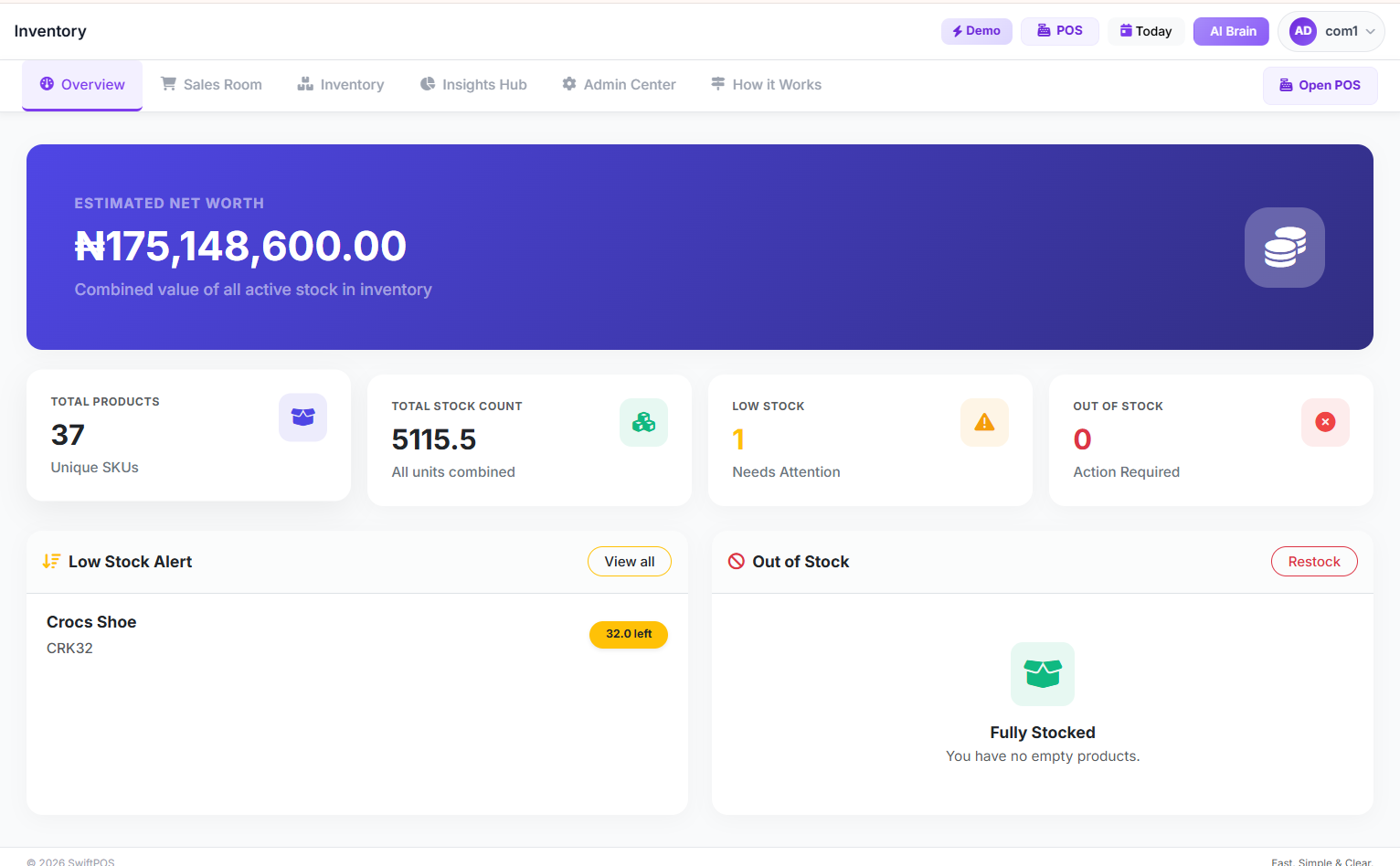 Inventory Dashboard
2. Uncontrolled Staff Theft and Internal Fraud
It's a harsh reality, but employee theft is a significant contributor to shop losses. This can range from cashiers pocketing small amounts to staff colluding to steal merchandise. Without proper checks and balances, these losses can go unnoticed for months, costing a business thousands. Monthly losses due to theft/shrinkage are estimated between ₦5,000 and ₦50,000.
How to Fix It: Implement strict access controls and monitor staff activities. Every transaction, discount, or void should be logged and attributed to a specific staff member. Manager approvals for sensitive actions like price overrides or cancellations can also deter dishonest practices. Regularly reviewing an
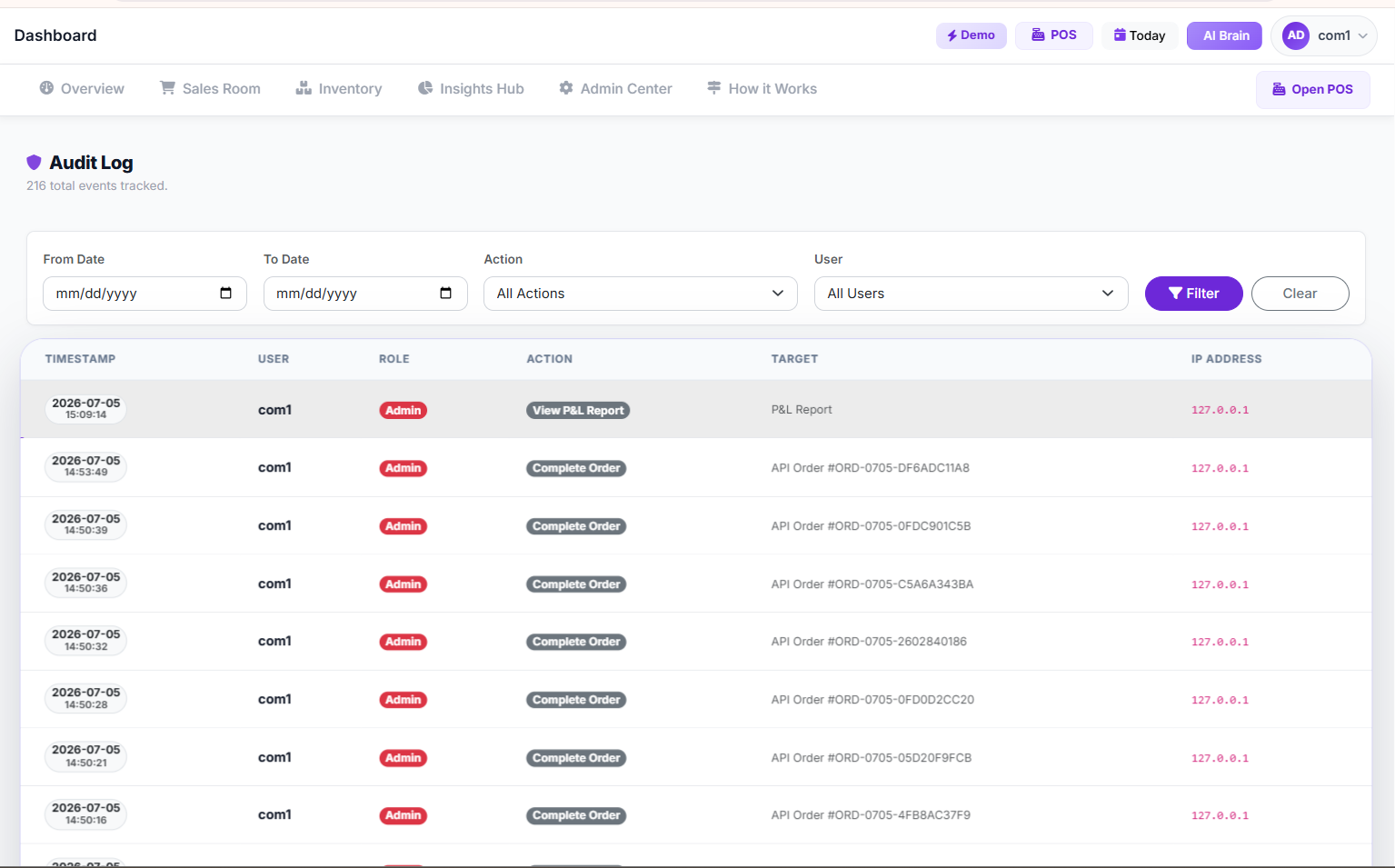 Audit Log Page
3. Inefficient Cash Management and Reconciliation Errors
Manual cash handling is prone to errors, whether it's miscounting change, unrecorded sales, or discrepancies at the end of the day. These small errors accumulate, leading to significant retail losses over time. The time spent manually reconciling can also be better utilized.
How to Fix It: Automate your cash reconciliation process. A system that tracks every sale and payment method will make end-of-day reconciliation faster and more accurate, reducing human error and preventing cash discrepancies.
4. Poor Tracking of Customer Debts and Credit Sales
Offering credit to trusted customers is common in Nigeria, but without a systematic way to track these debts, businesses often lose money through forgotten payments or difficulties in recovery. Many small businesses have informal credit books that are easily misplaced or tampered with.
How to Fix It: Maintain a digital customer credit book that records every credit sale, partial payment, and outstanding balance. This provides a clear, undeniable record and helps in timely follow-ups. You can manage your
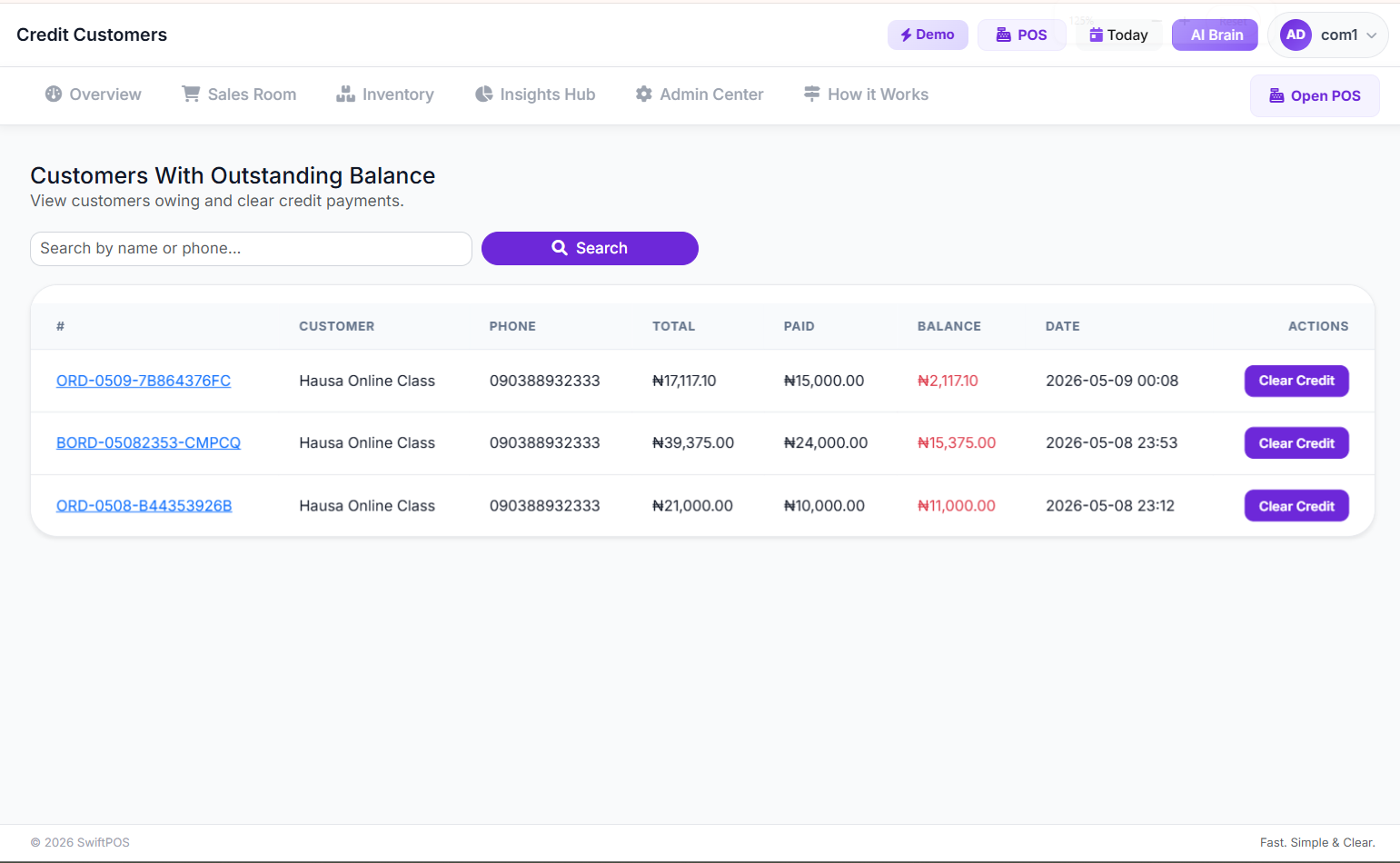 Credit Customers List Page
5. Lack of Visibility into True Profitability (Gross vs. Net)
Many retailers focus solely on sales revenue, mistakenly equating high sales with high profit. They often overlook the true cost of doing business, including operating expenses like rent (₦80,000 - ₦2,000,000/year), generator fuel (₦15,000 - ₦150,000/month), and staff salaries (₦40,000 - ₦80,000/month). Without a clear picture of net profit, businesses can be busy but still struggling financially.
How to Fix It: Track all expenses meticulously and integrate them with your sales data to calculate true net profit. This allows you to identify areas where costs can be cut or prices adjusted to ensure healthy margins. Understanding your
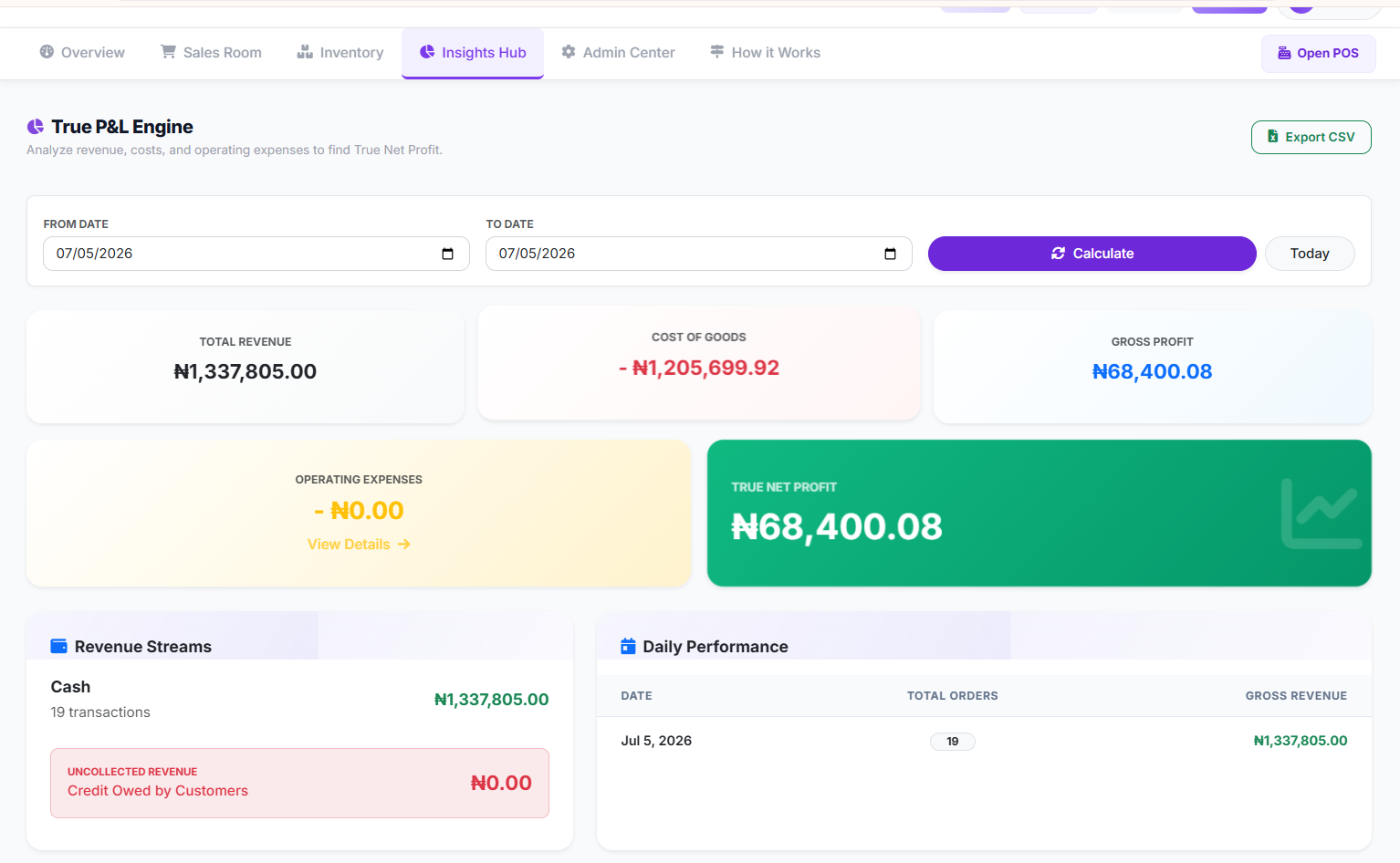 Profit and Loss Page
6. Ineffective Pricing Strategies and Discount Management
Setting prices too low can erode margins, while setting them too high can deter customers. Inconsistent pricing across different sales channels or branches, and uncontrolled discounting, can also lead to significant revenue leaks.
How to Fix It: Use data to inform your pricing strategies. Analyze sales data to understand which products are price-sensitive and which can command higher margins. Implement a controlled discount system that requires manager approval for significant markdowns.
7. Missed Sales Opportunities Due to Stockouts
When a customer comes in for a specific item and you're out of stock, it's not just a lost sale; it's a potential lost customer. Repeat stockouts can damage your reputation and drive customers to competitors. This is particularly critical in competitive markets.
How to Fix It: Implement intelligent stock forecasting. A system that predicts when products will run out based on sales trends allows you to reorder proactively, ensuring popular items are always available. Learn more about How to Predict When Products Will Run Out of Stock in Nigeria.
8. Suboptimal Supplier Management and Purchase Decisions
Without proper tracking of supplier performance, payment terms, and purchase history, businesses can end up paying more for goods, missing out on bulk discounts, or dealing with unreliable suppliers. This impacts your initial cost of goods, directly affecting your profit margins.
How to Fix It: Centralize your supplier information and purchase records. Track supplier prices, delivery times, and payment terms to make informed purchasing decisions and negotiate better deals.
9. Lack of Data-Driven Business Insights
Many Nigerian retailers operate on guesswork or intuition, lacking concrete data to understand customer preferences, best-selling products, or peak sales periods. This leads to inefficient marketing, poor product assortment, and missed growth opportunities.
How to Fix It: Collect and analyze sales data to gain actionable insights. Identify your most profitable products, understand customer buying patterns, and use this information to optimize your stock, promotions, and shop layout. Our
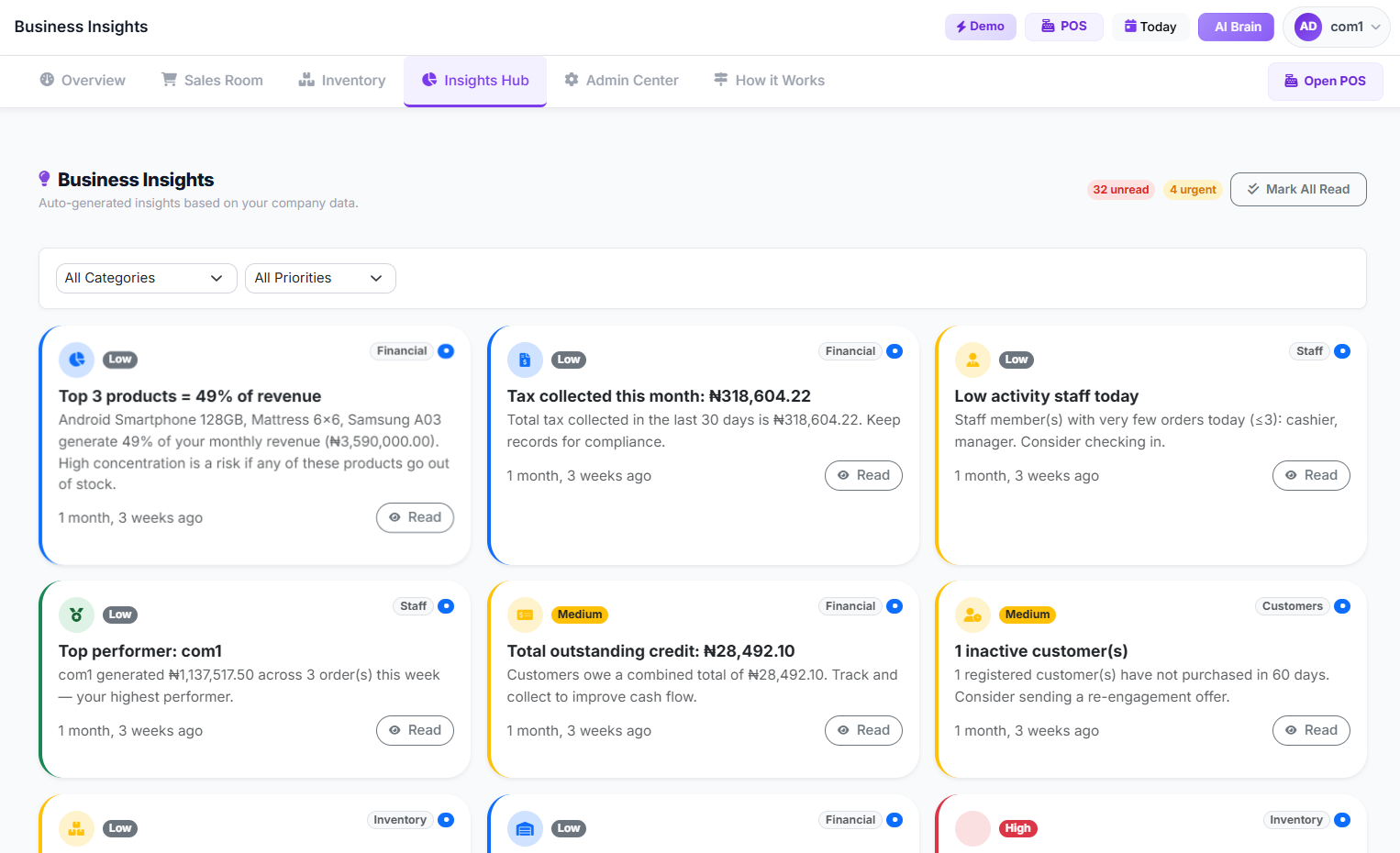 Business Insights Page
10. Inefficient Multi-Branch Operations
For businesses with multiple branches, managing inventory, sales, and staff across locations manually is a logistical nightmare. Inconsistencies in stock, pricing, and reporting between branches can lead to significant inefficiencies and losses.
How to Fix It: Adopt a centralized system that connects all your branches. This allows for real-time visibility of stock across locations, seamless transfers, and consolidated reporting, ensuring consistent operations and better control. Explore our guide on Multi-Branch Retail: Guide to Seamless Operations & Profitability.
The Smarter Approach: Integrated Retail Management
The common thread among these business mistakes is a reliance on disjointed, manual processes. The smarter approach involves integrating all aspects of your retail operations into a single, cohesive system. This moves beyond just a simple cash register to a comprehensive platform that manages your sales, inventory, customers, staff, expenses, and reporting from one place.
This integration provides real-time visibility, reduces manual errors, and automates many time-consuming tasks. It transforms your business from reactive to proactive, allowing you to anticipate challenges, identify opportunities, and make data-backed decisions that drive profitability. It's about having a central brain for your business, ensuring every part works together efficiently.
> "In the retail landscape of 2026, data is the new currency. Businesses that harness it thrive; those that don't, merely survive."
How SwiftPOS NG Transforms Retail Operations
This is where a modern Point-of-Sale (POS) and business management system like SwiftPOS NG becomes invaluable. SwiftPOS NG is designed specifically for Nigerian retailers, addressing these common pain points with intelligent features that empower you to take control of your business.
SwiftPOS NG connects all the dots:
- Seamless Sales: With Classic, Smart Grid, and Barcode POS interfaces, sales are fast and accurate, handling various payment methods and printing professional receipts. Even when the internet is down, offline operations ensure you never miss a sale.
- Intelligent Inventory: Manage products, categories, cost prices, selling prices, and track stock quantities with ease. Features like expiration date tracking and bulk product import/export simplify stock control. The system can even help you predict when items will run out with its .
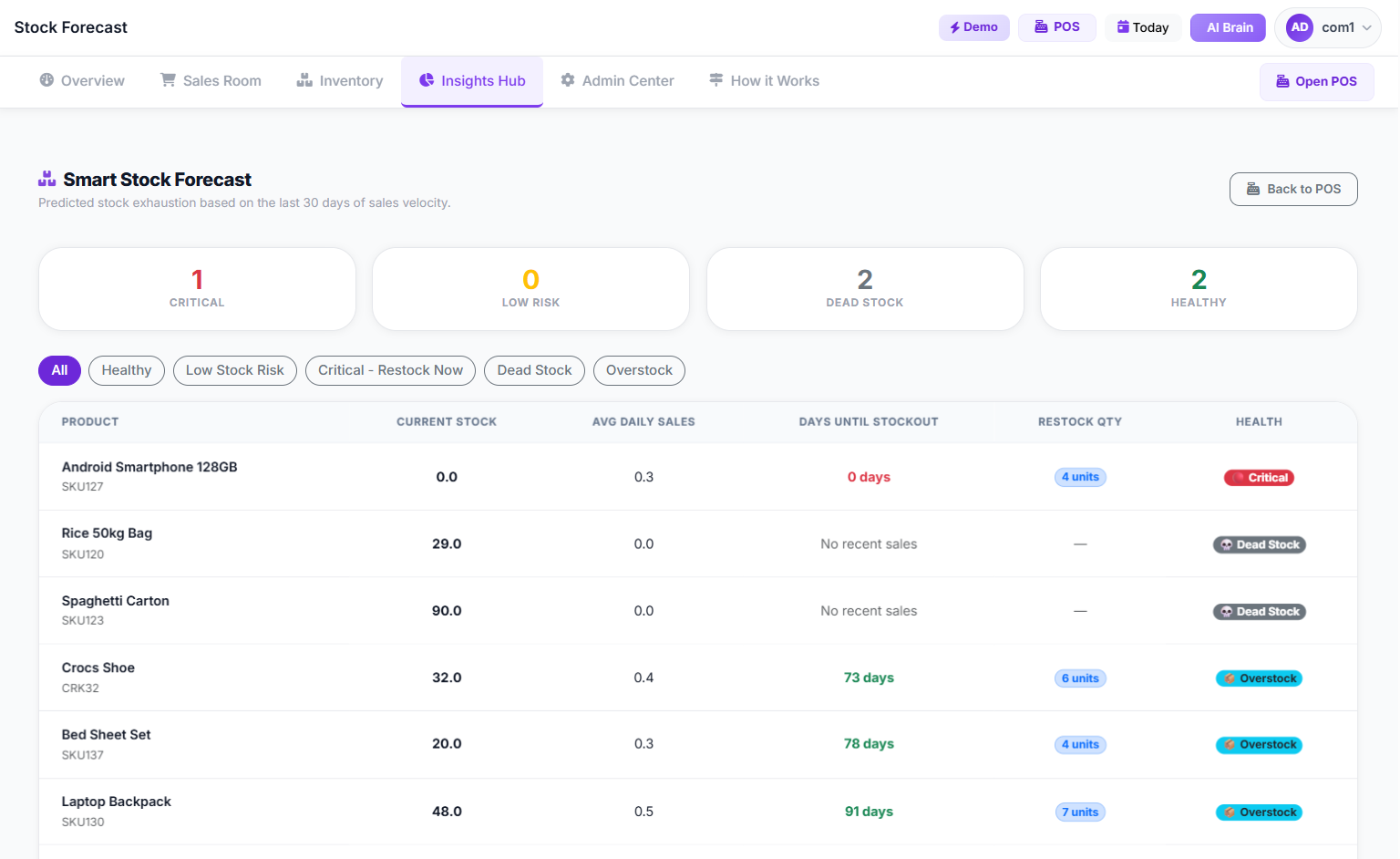 Smart Store Forecast Page
 - Customer & Credit Management: Keep a comprehensive customer directory and manage credit sales with a digital credit book, tracking balances and payment histories.
- Staff Control & Security: Define staff roles, set permissions, and require manager approval for sensitive actions. The system logs all staff activity and flags suspicious patterns, significantly reducing internal fraud. Learn how to Set Staff Access Permissions in Retail Software.
- Financial Clarity: Track all business expenses and gain a clear picture of your true net profit after all operating costs. This moves you beyond just sales figures to understanding actual profitability.
- Multi-Branch Mastery: For growing businesses, SwiftPOS NG offers robust multi-branch management, allowing you to track stock, sales, and staff across all your locations and even manage a central warehouse with unit conversion capabilities.
Proof: Side-by-Side Comparison
Let's look at how an integrated system like SwiftPOS NG stacks up against traditional methods:
| Feature/Aspect | Traditional/Manual Methods | Modern Integrated System (e.g., SwiftPOS NG) |
|---|---|---|
| Inventory Tracking | Manual counts, spreadsheets, prone to errors, stockouts/overstocking. Monthly losses from expired stock: ₦3,000 - ₦30,000. | Real-time stock levels, automated alerts, expiration tracking, stock forecasting. Minimized waste and optimized stock. |
| Sales Recording | Paper ledgers, manual calculations, slow, prone to cash errors. | Fast POS interfaces (barcode, grid, classic), accurate transactions, digital receipts. |
| Customer Credit | Informal credit books, forgotten debts, difficult recovery. | Digital credit book, clear balances, payment history, easy follow-ups. |
| Staff Accountability | Limited oversight, high risk of internal theft (₦5,000 - ₦50,000 monthly). | Role-based permissions, activity logs, manager approvals, suspicious activity flags. |
| Profit Visibility | Focus on gross sales, expenses often untracked, unclear net profit. | Comprehensive expense tracking, clear gross and net profit reports. |
| Business Insights | Guesswork, intuition, missed opportunities. | Data-driven reports, sales trends, product performance, customer insights. |
| Multi-Branch Management | Disjointed operations, inconsistent data, logistical nightmares. | Centralized control, real-time stock across branches, consolidated reporting. |
| Data Security/Backup | Vulnerable to loss (fire, theft, damage), no easy backup. | Cloud-based data, automatic backups, secure access. |
| Operational Efficiency | Time-consuming manual tasks, slow processes. | Automated processes, faster transactions, reduced administrative burden. |
| Scalability | Difficult and complex to expand. | Easily scales with your business, adding branches, products, and staff seamlessly. |
Frequently Asked Questions
Q1: How much does it cost to implement a system like SwiftPOS NG for a small shop in Nigeria?
The cost can vary depending on the features and scale of your business. Many modern POS systems offer subscription models, making them affordable for small businesses. For instance, SwiftPOS NG offers various plans designed to suit different business sizes, and you can check the specific pricing details on our pricing page. New businesses often get a free trial period to experience the system firsthand.
Q2: What if my shop frequently experiences internet downtime? Can a POS system still work?
Yes, many advanced POS systems, including SwiftPOS NG, are designed with offline capabilities. This means you can continue to process sales, manage inventory, and conduct other critical operations even without an internet connection. Once connectivity is restored, all data automatically synchronizes, ensuring no loss of information. This is a crucial feature for Nigerian businesses facing unreliable internet.
Q3: How long does it take to set up and train staff on a new POS system?
The setup time depends on the complexity of your inventory and business structure. However, user-friendly systems are designed for quick onboarding. SwiftPOS NG provides clear tutorials and an intuitive interface to help you and your staff get started rapidly. Many businesses can be up and running within a few days or weeks, especially with a step-by-step onboarding guide.
Q4: Can a POS system help me manage customer relationships and credit sales more effectively?
Absolutely. A good POS system includes customer relationship management (CRM) features that allow you to maintain a customer database, track purchase history, and manage credit accounts. This helps you identify loyal customers, offer personalized promotions, and ensure timely collection of debts, preventing common retail losses related to customer credit.
Q5: Is a POS system only for large supermarkets, or can a small provision store benefit too?
A common misconception is that POS systems are only for large enterprises. In reality, even small provision stores and mini-marts can significantly benefit. The core functionalities – sales tracking, inventory control, and expense management – are crucial for businesses of all sizes to prevent shop losses and optimize profitability. The benefits for a provision store are detailed in our guide on How to Start a Provision Store Business in Nigeria: POS Software Guide.
Stop the Bleeding, Start Growing
The retail landscape in Nigeria is dynamic and challenging, but with the right tools, you can navigate it successfully and turn potential losses into tangible profits. Don't let manual processes and hidden inefficiencies drain your hard-earned money. By investing in a modern, integrated retail management system, you're not just buying software; you're investing in the future and stability of your business.
Ready to plug those revenue leaks and empower your business with intelligent insights? Start your free trial today and discover how SwiftPOS NG can transform your retail operations.

Why Your Business Makes Sales But Has No Cash (Profita…
Sep 17, 2026
How to Calculate Your Retail Shop's True Profit (A Ste…
Sep 16, 2026
How to Calculate Supermarket Profitability in Nigeria:…
Sep 15, 2026